

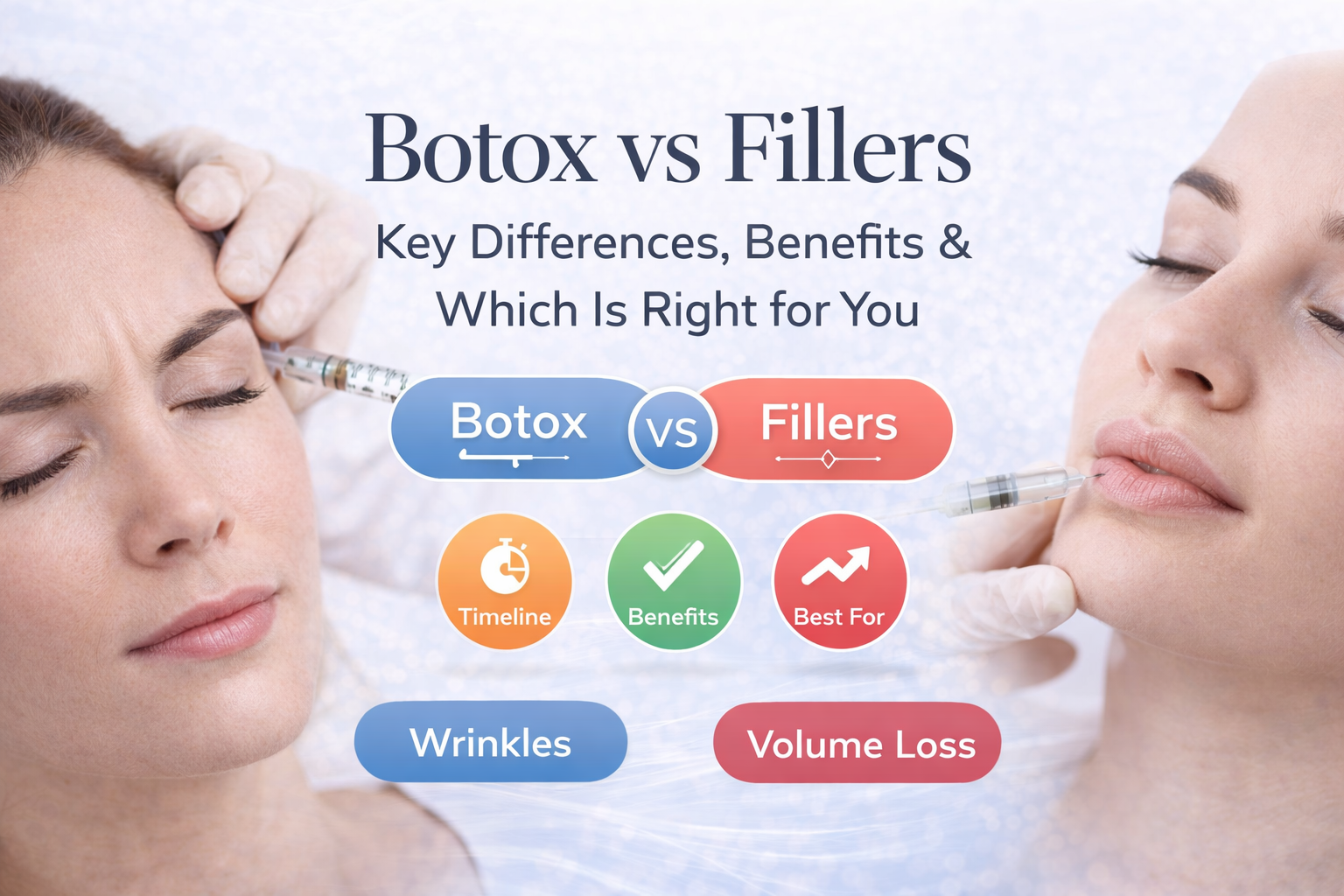
Fine lines, wrinkles, and loss of facial volume are common signs of ageing, but Botox offers safe, fast, and effective ways to rejuvenate your appearance. While Botox and dermal fillers are both popular anti-ageing treatments, they work differently: Botox relaxes facial muscles to smooth dynamic wrinkles, whereas fillers restore volume and enhance contours.
Understanding the differences and proper care ensures the best results and helps patients make informed choices.
Botox: How It Works
Botox is a neuromodulator – a wrinkle-relaxing injection that temporarily relaxes facial muscles responsible for expression lines, including forehead wrinkles, frown lines, and crow’s feet.
Benefits of Botox:
- Smooths dynamic wrinkles caused by facial movements
- Prevents new wrinkles from forming
- Quick, minimally invasive procedure
- Ideal for first-time users and sensitive areas
Botox is best suited for movement-related wrinkles, helping achieve a natural, refreshed look with minimal downtime.

Fillers: How They Work
Dermal fillers restore lost volume, smooth deep lines, and enhance facial contours. Common treatment areas include cheeks, lips, under-eye hollows, and nasolabial folds.
Benefits of Fillers:
- Restores facial volume and structure
- Smooths deep wrinkles and folds
- Enhances lips, cheeks, and overall facial contours
- Provides immediate, natural-looking results
While Botox targets dynamic wrinkles, fillers focus on replenishing volume and improving facial symmetry.
Botox vs Fillers: Quick, Easy Differences
Purpose:
- Botox: Smooths wrinkles caused by facial movements.
- Fillers: Adds volume, lifts, and smooths static wrinkles.
Results Timeline:
- Botox: Visible in 3–7 days.
- Fillers: Immediate, full effect in 1–2 weeks.
Duration:
- Botox:3–6 months.
- Fillers: 6–18 months depending on type.
Best Treatment Areas:
- Botox:Forehead, frown lines, around the eyes.
- Fillers: Cheeks, lips, under eyes, nasolabial folds.
Downtime:
- Botox: Minimal; return to daily activities immediately.
- Fillers:Minimal; slight swelling or bruising may occur for a day or two.
Tips by Dr Simran Pahilani, Leor Skin Clinic:
- Hydrate and Prep Your Skin – Well-moisturized skin helps Botox and fillers achieve smoother, longer-lasting results.
- Avoid Blood-Thinning Medications Before Fillers – Skip aspirin, ibuprofen, or alcohol 24–48 hours before treatment to reduce bruising or swelling.
- Follow Post-Treatment Care – Avoid massaging Botox-treated areas for 24 hours and limit heat, heavy exercise, or facial massages after fillers for a few days.
Botox and fillers are both safe, effective solutions to combat signs of ageing, but each serves a different purpose. Botox smooths dynamic wrinkles, while fillers restore volume and enhance facial contours. Choosing the right treatment or a combination of both helps you achieve a youthful, refreshed, and natural appearance.
Take the first step toward rejuvenated skin by Booking a Consultation today at Leor Skin Clinic, Pune to see which Botox or filler treatment is ideal for you.
FAQs – Botox vs Fillers
1. Is Botox safe?
Yes, Botox is FDA-approved and safe when administered by trained professionals.
2. How long does Botox last?
Results typically last 3–6 months, depending on the treatment area.
3. Can Botox and fillers be combined?
Yes. Combining both can provide a comprehensive anti-ageing effect.
4. Does Botox hurt?
Most patients feel only mild discomfort; topical numbing is optional.
5. Are fillers reversible?
Hyaluronic acid fillers can be dissolved if needed.
6. How soon will I see results from Botox?
Results usually appear within 3–7 days.
7. Do I need a consultation before treatment?
Yes. A professional assessment ensures you choose the right treatment for your goals.


Leave a Reply