Leor Clinics : Pune's Expert in Skin, Hair & Body Treatments

Category: Uncategorized

  • Fast Ways to Slimming Without the Gym

    Fast Ways to Slimming Without the Gym

    Want to shed extra kilos, but are bored with working out? Then here are some fast ways to slim without the gym using EMSCULPT NEO and advanced non-surgical body contouring solutions. 

    Everyone wants to achieve a size zero figure, but does not have the time or inclination to spend hours at the gym. Busy lifestyles, physical limitations, or stubborn fat can make traditional weight loss challenging. Fortunately, aesthetic medicine now offers fast ways for slimming without the gym, combining fat reduction, muscle toning, and body contouring through advanced, non-surgical treatments. 

    Leor Skin Clinic Pune offers EMSCULPT NEO. This treatment stands out as a game-changing slimming solution, delivering both fat reduction and muscle strengthening in a single session. 

    Why Slimming Without the Gym Is Gaining Popularity 

    Exercise supports overall health, but it often falls short when it comes to targeted fat loss and body sculpting. Non-surgical slimming treatments focus on specific problem areas such as the abdomen, thighs, arms, and buttocks that are notoriously resistant to diet and workouts. 

    These slimming solutions work by breaking down fat cells, tightening skin, and enhancing muscle tone, helping achieve visible inch loss with minimal downtime. 

    Hero Slimming Treatment: EMSCULPT NEO 

    EMSCULPT NEO is an advanced body contouring treatment that combines radiofrequency (RF) energy with high-intensity focused electromagnetic (HIFEM) technology, which targets and stimulates the muscles, causing them to contract and tone. As per the reports published by the National Library of Medicine, HIFEM-based devices have proved effective and safe for abdominal body shaping. 

    Why EMSCULPT NEO Leads Slimming Treatments: 

    • Burns fat and builds muscle simultaneously 
    • Strengthens muscles equivalent to thousands of crunches 
    • Improves body tone, firmness, and definition 
    • Non-invasive, pain-free, and zero downtime 

    EMSCULPT NEO is ideal for individuals looking for effective slimming without the gym, especially for the abdomen, buttocks, thighs, and arms. 

    Other Effective Slimming Treatments Without the Gym 

    1. Non-Surgical Body Slimming – Advanced body slimming treatments target fat pockets and contour the body without surgery or recovery time. 

    2. Fat Reduction Therapies – These slimming procedures focus on breaking down stubborn fat cells, which are naturally eliminated by the body. 

    3. Skin Tightening Treatments – Skin firmness plays a vital role in slimming results. Skin-tightening procedures improve elasticity, enhancing overall body shape. 

    4. Personalised Slimming Plans –  A customised slimming plan often combines EMSCULPT NEO with complementary treatments for optimal, long-lasting results. 

    Benefits of Slimming Treatments Without the Gym 

    • No strenuous workouts required 
    • Targeted slimming for stubborn areas 
    • Visible inch loss and muscle toning 
    • Minimal to zero downtime 
    • Safe, non-surgical, and clinically guided 

    These fast-slimming treatments are particularly suited for busy professionals and individuals seeking noticeable results without lifestyle disruption. 

    Slimming no longer has to revolve around intense gym routines. With advanced solutions like EMSCULPT NEO, there are fast ways to slim without the gym that are safe, effective, and tailored to individual goals. By combining fat reduction, muscle toning, and skin tightening, these treatments deliver visible body contouring results with minimal effort. 

    Ready to experience smart slimming? Book a Consultation today at Leor Skin Clinic, Pune, to explore how EMSCULPT NEO and advanced slimming treatments can help you achieve your body goals. 

    FAQs: Fast Ways to Slimming Without the Gym 

    1. Is EMSCULPT NEO safe for slimming? 
    Yes, EMSCULPT NEO is FDA-approved and safe when performed by trained professionals. 

    2. How soon can I see slimming results? 
    Visible results are typically seen within a few sessions. 

    3. Does EMSCULPT NEO replace exercise? 
    It complements a healthy lifestyle but does not replace overall fitness. 

    4. Is there downtime after slimming treatments? 
    No, most slimming treatments, including EMSCULPT NEO, have zero downtime. 

    5. Can slimming treatments target belly fat? 
    Yes, they are highly effective for stubborn abdominal fat. 

    6. Are slimming results permanent? 
    Results can be long-lasting with maintenance and balanced habits. 

    7. Is consultation required before slimming treatments? 
    Yes, a personalised consultation ensures the right slimming plan for your body. 

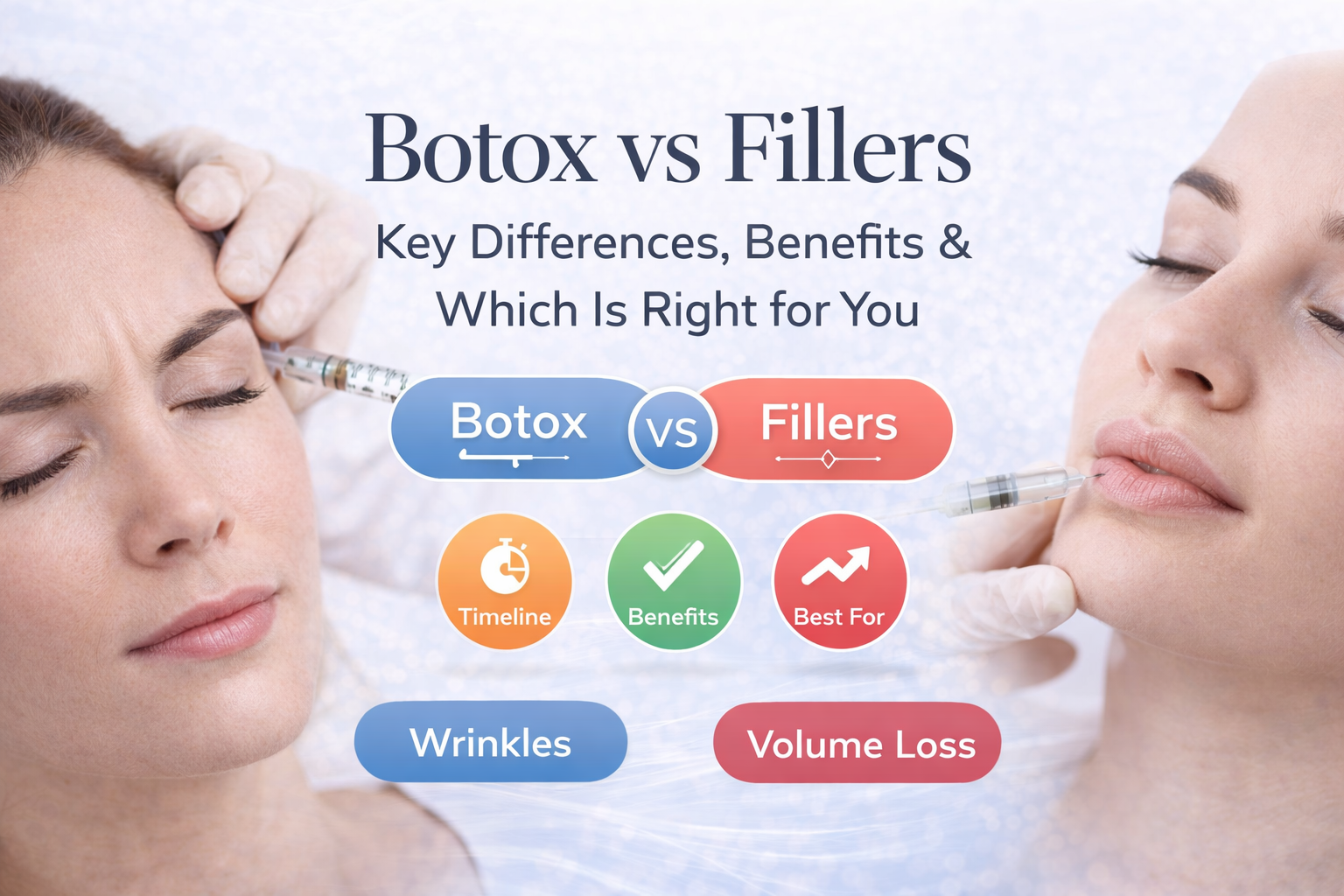
  • Difference between Botox vs Fillers

    Difference between Botox vs Fillers

    Fine lines, wrinkles, and loss of facial volume are common signs of ageing, but Botox offers safe, fast, and effective ways to rejuvenate your appearance. While Botox and dermal fillers are both popular anti-ageing treatments, they work differently: Botox relaxes facial muscles to smooth dynamic wrinkles, whereas fillers restore volume and enhance contours. 

    Understanding the differences and proper care ensures the best results and helps patients make informed choices. 

    Botox: How It Works 

    Botox is a neuromodulator – a wrinkle-relaxing injection that temporarily relaxes facial muscles responsible for expression lines, including forehead wrinkles, frown lines, and crow’s feet. 

    Benefits of Botox: 

    • Smooths dynamic wrinkles caused by facial movements 
    • Prevents new wrinkles from forming 
    • Quick, minimally invasive procedure 
    • Ideal for first-time users and sensitive areas 

    Botox is best suited for movement-related wrinkles, helping achieve a natural, refreshed look with minimal downtime. 

    Fillers: How They Work 

    Dermal fillers restore lost volume, smooth deep lines, and enhance facial contours. Common treatment areas include cheeks, lips, under-eye hollows, and nasolabial folds. 

    Benefits of Fillers: 

    • Restores facial volume and structure 
    • Smooths deep wrinkles and folds 
    • Enhances lips, cheeks, and overall facial contours 
    • Provides immediate, natural-looking results 

    While Botox targets dynamic wrinkles, fillers focus on replenishing volume and improving facial symmetry. 

    Botox vs Fillers: Quick, Easy Differences 

    Purpose: 

    • Botox: Smooths wrinkles caused by facial movements. 
    • Fillers: Adds volume, lifts, and smooths static wrinkles. 

    Results Timeline: 

    • Botox: Visible in 3–7 days. 
    • Fillers: Immediate, full effect in 1–2 weeks. 

    Duration: 

    • Botox:3–6 months. 
    • Fillers: 6–18 months depending on type. 

    Best Treatment Areas: 

    • Botox:Forehead, frown lines, around the eyes. 
    • Fillers: Cheeks, lips, under eyes, nasolabial folds. 

    Downtime: 

    • Botox: Minimal; return to daily activities immediately. 
    • Fillers:Minimal; slight swelling or bruising may occur for a day or two. 

    Tips by Dr Simran Pahilani, Leor Skin Clinic: 

    1. Hydrate and Prep Your Skin – Well-moisturized skin helps Botox and fillers achieve smoother, longer-lasting results. 
    1. Avoid Blood-Thinning Medications Before Fillers – Skip aspirin, ibuprofen, or alcohol 24–48 hours before treatment to reduce bruising or swelling. 
    1. Follow Post-Treatment Care – Avoid massaging Botox-treated areas for 24 hours and limit heat, heavy exercise, or facial massages after fillers for a few days. 

    Botox and fillers are both safe, effective solutions to combat signs of ageing, but each serves a different purpose. Botox smooths dynamic wrinkles, while fillers restore volume and enhance facial contours. Choosing the right treatment or a combination of both helps you achieve a youthful, refreshed, and natural appearance. 

    Take the first step toward rejuvenated skin by Booking a Consultation today at Leor Skin Clinic, Pune to see which Botox or filler treatment is ideal for you. 

    FAQs – Botox vs Fillers 

    1. Is Botox safe? 
    Yes, Botox is FDA-approved and safe when administered by trained professionals. 

    2. How long does Botox last? 
    Results typically last 3–6 months, depending on the treatment area. 

    3. Can Botox and fillers be combined? 
    Yes. Combining both can provide a comprehensive anti-ageing effect. 

    4. Does Botox hurt? 
    Most patients feel only mild discomfort; topical numbing is optional. 

    5. Are fillers reversible? 
    Hyaluronic acid fillers can be dissolved if needed. 

    6. How soon will I see results from Botox? 
    Results usually appear within 3–7 days. 

    7. Do I need a consultation before treatment? 
    Yes. A professional assessment ensures you choose the right treatment for your goals. 

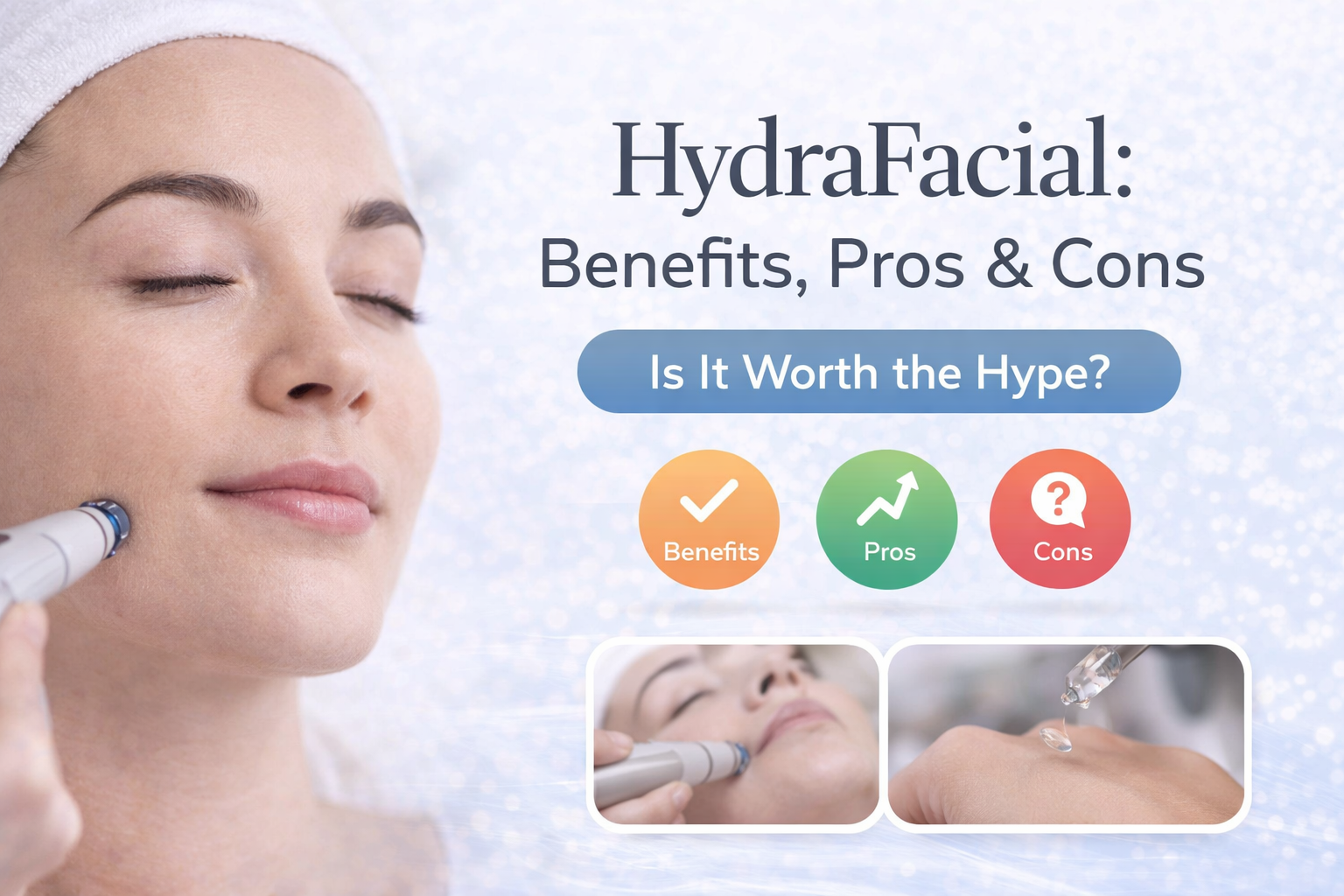
  • HydraFacial: Is It Worth the Hype?

    HydraFacial: Is It Worth the Hype?

    HydraFacial has become the talk of the town. This professional skincare treatment is praised for delivering an instant glow with zero downtime. Designed to be gentle yet effective, HydraFacial appeals to those who want healthier-looking skin without aggressive procedures.

    “HydraFacial is a versatile treatment that gently cleanses, exfoliates, extracts impurities, hydrates, and infuses antioxidants in a single session. While the results are immediate and gratifying, consistency and proper skin analysis are key to long-term benefits. The beauty of this treatment is that it is suitable for all skin types,” says Dr. Simran Pahilani, Leor Skin Clinic, Pune.

    Here’s a quick look at both the advantages and limitations to help you decide if HydraFacial truly lives up to the hype.

    The Pros of Hydra Facial 

    1. Instant Hydration and Glow

    It delivers deeply nourishing serums that leave the skin hydrated, plumper, and radiant immediately after the treatment.

    2. Thorough Yet Gentle Cleansing

    Advanced vortex technology clears pores and removes dead skin cells without harsh scrubbing. This makes it effective yet non-irritating.

    3. Customizable for Individual Skin Concerns

    From dryness and congestion to dullness, HydraFacial serums can be tailored to suit specific skin needs.

    4. No Downtime

    One of the biggest advantages of HydraFacial is that there is no downtime. There is usually no redness or peeling, making it ideal even before an event.

    5. Suitable for Most Skin Types

    It is safe for oily, dry, sensitive, and aging skin when performed by a trained professional.

    The Cons of Hydra Facial 

    1. Temporary Results

    The glow is noticeable but may last only a few weeks. Regular HydraFacial sessions are often recommended for sustained improvement.

    2. Limited Impact on Deep Skin Concerns

    While it enhances surface appearance, it may not fully treat deeper pigmentation or severe acne scars.

    3. Higher Cost Compared to Basic Facials

    Due to advanced technology and medical-grade serums, it is priced higher than traditional facials.

    HydraFacial FAQs: 

    1. What is a HydraFacial and how does it work? 
    Hydra Facial is a non-invasive skincare treatment that cleanses, exfoliates, extracts impurities, and hydrates the skin using vortex technology and nourishing serums. 

    2. Is HydraFacial good for all skin types? 
    Yes, Hydra Facial is suitable for most skin types, including oily, dry, sensitive, and acne-prone skin, when customised by a trained professional. 

    3. How long does a HydraFacial take? 
    A typical Hydra Facial session takes about 30 to 45 minutes, making it a convenient lunchtime or pre-event treatment. 

    4. How long do HydraFacial results last? 
    Results usually last between 2 to 4 weeks. Consistent sessions help improve skin texture, hydration, and overall appearance over time. 

    5. Does HydraFacial help with acne and blackheads? 
    Hydra Facial can help reduce clogged pores, blackheads, and excess oil, making it effective for mild acne and congested skin. 

    6. Are there any side effects of HydraFacial? 
    Side effects are minimal. Some people may experience mild redness immediately after treatment, which typically subsides within a few hours. 

    7. Is HydraFacial worth it before a special occasion? 
    Yes. With no downtime and instant glow, Hydra Facial is one of the most popular treatments before weddings, parties, and important events. 

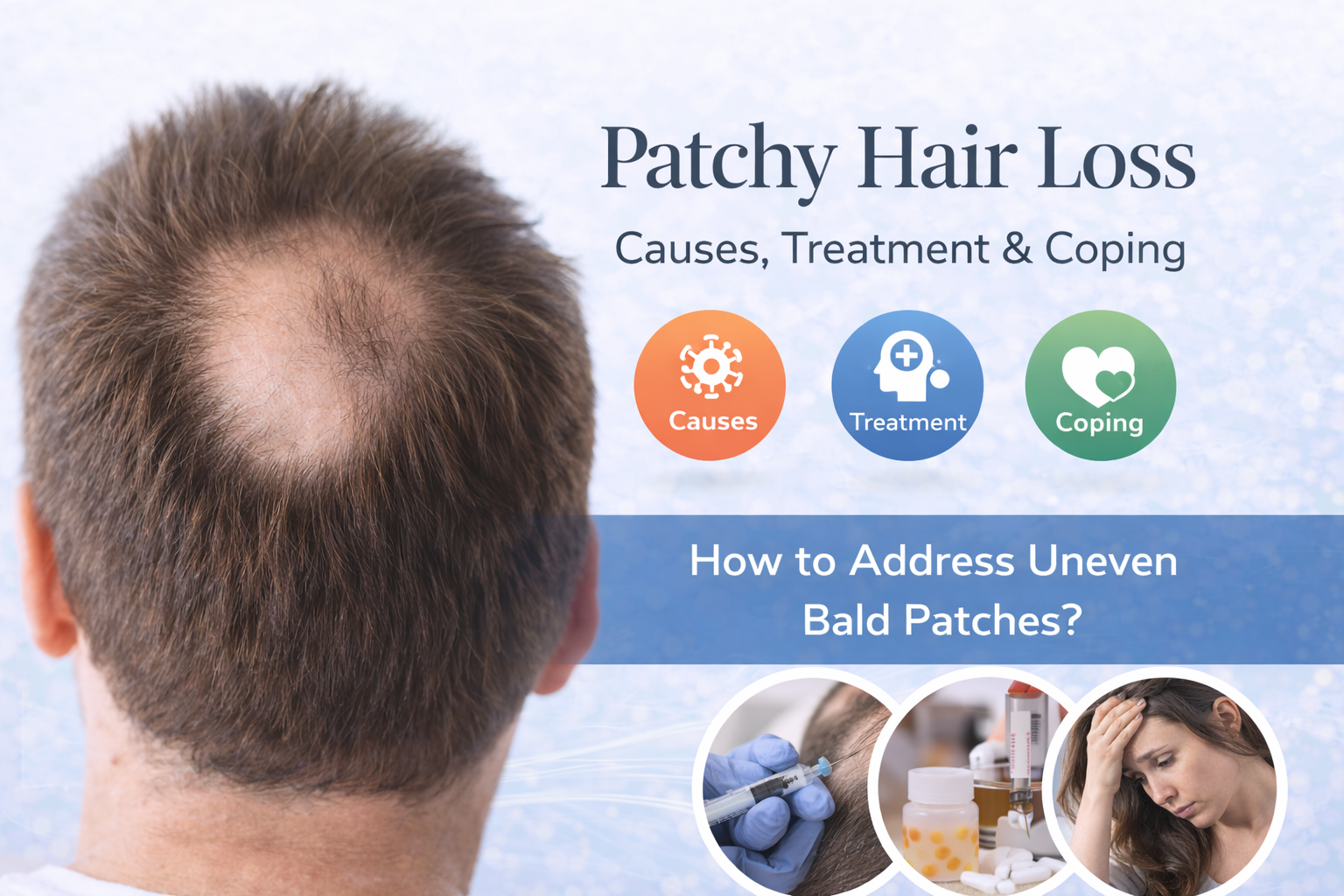
  • Patchy Hair Loss: Causes, Treatment & Coping

    Patchy Hair Loss: Causes, Treatment & Coping

    Hair is often seen as a silent reflection of identity, strength, and confidence. So when strands start disappearing in uneven patches, the mirror tells a story no one is prepared for. Patchy hair loss, also known as alopecia areata in many cases, is more than a physical concern, it can carry emotional weight too. Understanding the causes for patchy hair loss, available treatments, and ways to cope is the first step toward regaining both hair and peace of mind.

    What is Patchy Hair Loss? Why Does Hair Fall in Patches?

    Hair does not usually vanish evenly. When patchy hair loss on scalp occurs, it appears as small, round bald spots that may widen or multiply over time. These spots can emerge suddenly, leaving people confused and worried.

    There are different forms, such as patchy alopecia (caused by immune system disruptions) or traction alopecia (linked to hairstyles that pull tightly on hair). Unlike natural shedding, where hair thins overall, this condition creates visible patchy head hair gaps. The underlying reason? Disturbances in follicles, often triggered by the immune system, external stressors, or medical conditions.

    Causes of Patchy Hair Loss

    To understand how to treat patchy hair loss, it helps to know why it begins in the first place. The reasons are rarely one-dimensional; the body often reveals inner turbulence through hair.

    Autoimmune reactions

    One of the most common causes of patchy alopecia is an autoimmune response. In this condition, the immune system mistakenly identifies healthy hair follicles as threats and attacks them. This sudden reaction disrupts normal growth cycles, leading to small patchy hair loss areas that appear unexpectedly. These bald patches can remain small or expand over time, and in some cases, regrowth may occur before another patch forms elsewhere.

    Genetics

    For many people, heredity plays a role. If close family members have experienced alopecia areata or other forms of patchy head hair loss, the chances of developing the condition are higher. Genetic predisposition does not guarantee patchy hair loss in women or men, but it makes the follicles more vulnerable to hormonal shifts and immune irregularities.

    Stress

    The link between stress and hair health is well documented. Both emotional strain and physical stressors, such as illness or surgery, can shock follicles into a resting phase known as telogen effluvium. When this occurs, strands fall out in concentrated areas, creating patchy baldness treatment needs. Unlike gradual thinning, stress-induced loss often appears suddenly, adding to the distress.

    Infections

    Certain scalp infections, particularly fungal ones like tinea capitis (ringworm), can damage hair shafts and follicles. This leads to circular, inflamed bald spots that may be itchy or scaly. The good news is that once the infection is treated, hair often regrows. However, untreated infections can worsen patchy hair loss male or female cases and even lead to scarring alopecia in rare situations.

    Nutritional deficiencies

    What the body lacks in nutrients, the scalp often reveals. Deficiencies in iron, vitamin D, zinc, and biotin directly impact follicle strength and hair density. Without these essentials, follicles weaken, strands shed prematurely, and regrowth slows. For many women, patchy hair loss in women is linked to iron deficiency anemia, while men may notice thinning tied to poor protein or vitamin intake. Correcting these gaps through diet or supplements can support overall patchy hair loss treatment.

    In essence, the causes for patchy hair loss are diverse, ranging from microscopic battles inside the body to lifestyle missteps we overlook daily.

    Symptoms & Diagnosis

    The journey of patchy hair loss often begins quietly, what seems like a slightly thinner section of hair, or a few more strands left behind on the pillow. Over time, those subtle signs can transform into visible gaps that are hard to ignore. The Hair loss Patchy concern isn’t only about appearance; it often points to deeper imbalances within the body.

    Visible bald spots or thinning areas

    The hallmark symptom is the emergence of round or oval bald patches on the scalp. These patches may start small, sometimes no larger than a coin, and can gradually expand or multiply. In cases of patchy hair loss on scalp, these spots may appear smooth and skin-colored, or they may show broken strands at the edges.

    Sudden shedding of hair

    For many, the realization comes suddenly—hair shedding in noticeable clumps while showering, combing, or even running fingers through the scalp. This type of shedding feels different from everyday hair fall, as the strands often come out in groups, leaving small patchy hair loss areas that develop quickly.

    Changes in nail texture

    Although less common, some individuals with patchy alopecia also experience changes in their nails. Nails may become brittle, develop tiny pits, or show ridged surfaces. These subtle signs are important clues that dermatologists consider when diagnosing patchy hair loss in women or men.

    Diagnosis beyond surface observation

    Pinpointing the exact cause requires more than a quick glance in the mirror. Dermatologists approach patchy head hair concerns with a structured process. They study the pattern of hair loss, evaluate the scalp for inflammation or scaling, and ask detailed questions about lifestyle, stress levels, and medical history.

    In some cases, tests are necessary:

    • Blood tests may reveal hormonal shifts, iron deficiency, or autoimmune triggers.
    • Scalp biopsies provide insight into follicle health and rule out scarring alopecias.
    • Imaging or hormone studies may be done if conditions like thyroid disorders or PCOS are suspected.

    The purpose of this thorough evaluation is not only to confirm the presence of patchy hair loss male or female but to uncover what lies beneath. By identifying the root causes, be it nutritional imbalance, stress, or autoimmune reaction; dermatologists can craft a personalized patchy hair loss treatment plan.

    Diagnosis, therefore, is not the end of the process but the crucial first step. It sets the stage for understanding how to treat patchy hair loss effectively, preventing further progression, and guiding patients toward both medical and cosmetic solutions.

    Types of Patchy Hair Loss

    Bald patches may look similar at first glance, but the reasons behind them vary widely. Dermatologists identify several forms of patchy hair loss, each with its own pattern and treatment approach.

    Alopecia Areata

    An autoimmune condition where the body targets its own hair follicles, creating smooth, round bald patches. The loss can appear suddenly and may spread or recur over time.

    Traction Alopecia

    Caused by constant pulling from hairstyles like tight ponytails, braids, or extensions. Early stages are reversible, but prolonged tension may permanently weaken follicles.

    Cicatricial Alopecia (Scarring Alopecia)

    Here, inflammation destroys follicles and replaces them with scar tissue. Once this happens, hair cannot regrow. Symptoms like itching or burning sometimes appear before visible thinning.

    Tinea Capitis

    A fungal infection of the scalp, more common in children. It leaves scaly or inflamed bald patches and needs antifungal medication rather than standard hair loss treatments.

    Advanced Treatments for Patchy Hair Loss

    When the patches grow persistent, everyday fixes may not suffice. Dermatology has evolved with New Advanced Treatments designed to restart follicles and restore scalp balance.

    Medications & Topical Treatments

    Topical minoxidil and corticosteroid creams are often the first line of Alopecia treatment. They stimulate follicles, reduce inflammation, and encourage regrowth. Oral medicines may also be prescribed when patches are extensive.

    PRP Therapy (Platelet-Rich Plasma)

    PRP taps into the body’s natural healing system. Concentrated platelets drawn from your blood are injected into bald patches. This therapy signals follicles to reawaken, boosting density. For many patients, PRP is seen as a turning point in patchy hair loss treatment journeys. Alongside PRP, techniques like Meso therapy can enhance scalp nutrition and further stimulate regrowth.

    Laser Therapy for Hair Regrowth

    Low-level laser therapy penetrates the scalp and energizes cells to improve circulation and follicle metabolism. Over multiple sessions, patients notice thicker regrowth in areas of patchy head hair. Sometimes this is paired with procedures such as Micro needling, which creates tiny controlled injuries that trigger the scalp’s repair response.

    Hair Transplant (for severe cases)

    In cases where patches resist all other methods, transplants may be considered. Hair is relocated from denser areas to bald patches, offering a permanent form of patchy baldness treatment. Advanced biologic methods such as GFC therapy for hair loss also provide promising options by harnessing concentrated growth factors to strengthen and revive follicles.

    These hair loss and GFC for hair solutions mark a turning point for stubborn cases.

    Coping with Patchy Hair Loss

    The emotional weight of patchiness often feels heavier than the physical loss. Coping is about building resilience as much as treating the scalp.

    Foods that promote regrowth

    • Iron-rich foods: Spinach, lentils, and lean meats help oxygenate follicles.
    • Vitamin D sources: Sun exposure, fortified foods, and supplements support follicle cycles.
    • Biotin: Found in eggs, nuts, and seeds, biotin is essential for stronger hair strands.
    • Zinc: Boosts repair and helps regulate oil glands near follicles.
    • Omega-3 fatty acids: From fish and flaxseeds, they reduce inflammation and support scalp circulation.

    Adding these foods acts as home remedies for patchy hair loss, improving overall follicle health and supporting medical care.

    Why Choose Leor Clinics for Hair Loss Treatment?

    Experienced Dermatologists & Trichologists

    At Leor, every case of patchy hair loss in women or men is evaluated with expertise, ensuring underlying triggers are not missed.

    Advanced Non-Surgical Treatments

    From PRP to GFC and beyond, patients benefit from science-backed solutions that avoid surgical interventions while restoring confidence.

    Personalized Solutions for Lasting Results

    Each patchy alopecia case is unique. Care plans are customized, blending medical therapies, nutritional guidance, and cosmetic support to create sustainable regrowth and improved well-being.

    The Benefits of Timely Patchy Hair Loss Treatment

    Acting early against patchy hair loss male or female cases can transform both scalp health and overall well-being. Here’s why timing matters:

    • Prevents Follicle Damage:  Early Alopecia treatment keeps follicles active before they shrink or scar, which improves the chances of reversing patchy alopecia.
    • Boosts Regrowth Success: Therapies like PRP, laser therapy, and patchy baldness treatment show higher success rates when started before bald spots expand.
    • Supports Scalp Health: Addressing causes for patchy hair loss early helps maintain balanced circulation, reduced inflammation, and stronger hair roots.
    • Restores Confidence Sooner: Tackling small patchy hair loss before it spreads helps reduce self-consciousness and improves daily confidence.
    • Reduces Emotional Stress: Quick intervention means less worry about visible changes, lowering the psychological burden often linked to patchy hair loss in women and men.

    Conclusion

    Patchy hair loss may appear sudden and overwhelming, but it is not beyond control. By understanding triggers, exploring modern treatments, and adopting supportive habits, patients can move from helplessness to healing. Whether it is patchy hair loss on scalp from autoimmune reactions or patchy hair loss in women linked to hormonal imbalances, solutions exist. 

    Leor Clinics offers comprehensive care, combining Exclusive Treatments with targeted hair therapies, giving patients the chance to reclaim not just strands but confidence itself.

    FAQs

    Q1. What is Patchy Hair Loss?

    Patchy hair loss refers to localized bald spots, often circular, on the scalp or other areas. It commonly arises due to autoimmune activity but may also stem from stress, infections, or genetics.

    Q2. What causes patches of hair loss?

    The causes for patchy hair loss include alopecia areata, traction from hairstyles, scalp infections, hormonal imbalances, and nutritional deficiencies. In some cases, autoimmune conditions play the central role.

    Q3. Can patchy hair grow back?

    Yes. With timely patchy hair loss treatment like medications, PRP, or laser hair reduction, regrowth is often possible. However, scarring alopecia may result in permanent loss if untreated.

    Q4. How to stop worrying about alopecia?

    Understanding patchy alopecia and its treatments can reduce anxiety. Seeking medical help, adopting coping strategies, and exploring cosmetic options provide control and ease the emotional impact.

    Q5. What vitamin deficiency causes patchy hair loss?

    Deficiencies in iron, vitamin D, biotin, and zinc are strongly linked to small patchy hair loss. Correcting these through diet or supplements often improves hair strength and growth.

    Q6. Is patchy hair loss permanent?

    Not always. Non-scarring forms like alopecia areata can be reversible with proper care. However, patchy head hair loss from scarring conditions may be permanent without early intervention.

    Q7. Which treatment is best for patchy hair loss?

    Options include corticosteroid injections, PRP, patchy baldness treatment via transplants, or topical medications. A dermatologist tailors the plan based on the type and severity of loss.

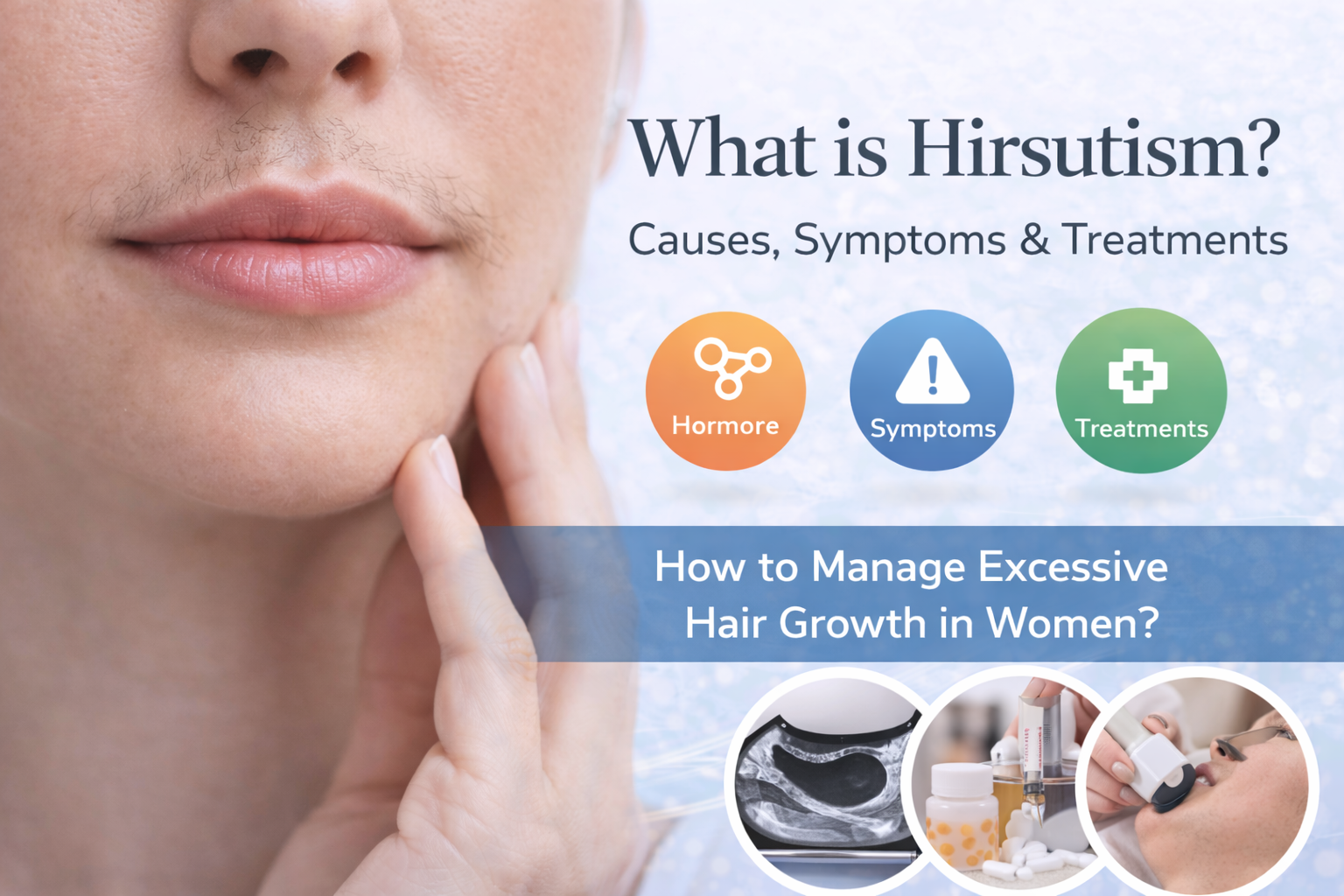
  • What is Hirsutism? Causes, Symptoms & Treatments

    What is Hirsutism? Causes, Symptoms & Treatments

    For many women, body hair feels like a manageable part of personal care—shaving, waxing, or trimming as needed. But when coarse, dark hair begins appearing in places where men typically grow it such as the chin, chest, or back – it can feel more like a medical condition than a grooming concern. This is hirsutism, a pattern of excessive hair growth that can cause more than just cosmetic frustration. It often affects self-esteem, disrupts social confidence, and may even indicate an underlying hormonal imbalance that needs medical attention.

    Hirsutism is not rare, yet it often goes under-discussed. Women experiencing it may silently wonder if it is “normal” or dismiss it as just genetics, while in reality, it may be linked to conditions like PCOS or other endocrine disorders. Understanding what it is, why it occurs, and how it can be treated is the first step toward regaining control over both appearance and health.

    What Is Hirsutism? How Does It Occur?

    Imagine waking up one day and noticing thick, dark strands sprouting on your chin or chest; areas where you never expected them. Unlike the fine, soft hair most women naturally have across their bodies, hirsutism involves excessive hair growth in what are called androgen-dependent areas. These are body regions most responsive to male hormones such as testosterone.

    In women, hirsutism often appears on the upper lip, jawline, chest, stomach, or back. This pattern is considered “male-like” hair growth because these sites typically develop coarse hair in men during puberty.

    It is important to separate hirsutism from hypertrichosis. Hypertrichosis refers to generalized hair growth that can affect any part of the body and is not necessarily linked to hormones. Hirsutism, however, is specifically triggered by the presence of higher levels of androgens or the skin’s increased sensitivity to these hormones.

    The mechanism is straightforward yet complex: when testosterone or other androgens rise beyond normal female levels, hair follicles in sensitive areas start producing thicker, pigmented hair instead of fine, barely visible strands.

    Common Causes of Hirsutism

    Why does hirsutism happen to some women and not others? The answer lies in both hormones and genetics. There are multiple eye-opening reasons why androgen levels or sensitivity may rise, and these causes often overlap.

    Polycystic Ovary Syndrome (PCOS)

    PCOS is the most common cause of hirsutism. The hormonal imbalance it creates leads to acne, irregular periods, weight changes, and visible hair growth. The strong link between PCOS and your skin makes it one of the first areas of investigation in diagnosis.

    Adrenal Gland Disorders

    Conditions such as Cushing’s syndrome or adrenal tumors can increase androgen production. The adrenal glands influence multiple hormones, and when they become overactive, hair growth is often one of the earliest visible changes.

    Congenital Adrenal Hyperplasia

    This inherited disorder alters how the adrenal glands produce hormones. Women with this condition often experience excessive hair growth from an early age.

    Ovarian Tumors

    Though rare, ovarian tumors may secrete hormones that elevate testosterone levels, contributing to unwanted hair.

    Medications

    Some medication hirsutism include drugs like anabolic steroids or certain hormonal therapies, can unintentionally trigger hirsutism as a side effect.

    Idiopathic Hirsutism

    In many women, no obvious disorder is found. Their hormone levels are normal, but hair follicles are highly sensitive to even small amounts of androgens. This category is called idiopathic hirsutism.

    When assessing causes, doctors often also consider how all skin treatments interact with hormonal health, since conditions like acne and pigmentation may coexist with hirsutism.

    Symptoms and Clinical Features

    The hallmark symptom of hirsutism is coarse, dark hair in areas associated with male-pattern growth. These include:

    • Chin and upper lip
    • Chest and nipples
    • Lower abdomen
    • Thighs or back

    Additional features often reveal the root cause:

    • Women with PCOS may also face irregular menstrual cycles, acne, and weight fluctuations.
    • Those with adrenal disorders may notice rapid hair growth accompanied by muscle changes or deepening of the voice.

    Beyond the physical, hirsutism carries social and psychological weight. Women often report embarrassment, reduced self-confidence, and anxiety, particularly when the face is affected. Addressing both physical and emotional symptoms is vital for comprehensive care.

    Diagnosing Hirsutism

    Diagnosis starts with a clinical evaluation. Doctors may use the Ferriman-Gallwey scoring system, which grades hair growth in different body areas to determine severity.

    Blood tests help measure androgen levels, such as testosterone or DHEA-S, to detect imbalances.

    Ultrasound is frequently used to identify ovarian cysts, especially in PCOS cases. CT or MRI imaging may be recommended if adrenal or ovarian tumors are suspected.

    Since accurate diagnosis guides treatment, consulting the best dermatologist in Pune ensures women receive the right medical plan for their specific cause.

    Treatment Options for Hirsutism

    When it comes to eye-catching excessive hair growth, no single fix works for everyone. Treatment often requires a combination of approaches, targeting both the hair and the hormones behind it.

    Medical Treatments

    • Hormonal therapy: Birth control pills balance hormones and slow down new hair growth.
    • Anti-androgen medicines: Drugs like spironolactone reduce androgen effects on follicles.
    • Topical creams: Eflornithine slows facial hair growth when applied regularly.

    Cosmetic Procedures

    For visible relief, cosmetic solutions play a crucial role. Laser hair reduction uses light energy to target follicles, reducing density and regrowth over multiple sessions. Some patients may choose laser hair removal, especially when aiming for long-term results. Electrolysis, though time-intensive, remains an option for removing facial hair permanently.

    Lifestyle and Home Remedies

    • Weight management can help reduce androgen levels, especially in PCOS.
    • A balanced diet improves insulin sensitivity, indirectly lowering hair production.
    • Gentle grooming practices reduce irritation from frequent hair removal.

    Together, these choices create a comprehensive pathway to managing hirsutism.

    Lifestyle Tips for Managing Hirsutism

    Medical procedures are powerful, but everyday habits shape how long results last and how severe hair growth becomes.

    • Stress management: High stress raises cortisol, which can disrupt hormonal balance. Relaxation techniques help.
    • Exercise: Regular physical activity regulates weight and improves hormonal health.
    • Sleep hygiene: Good sleep helps stabilize hormones and supports overall wellness.
    • Medication review: Avoiding drugs that increase androgens prevents worsening symptoms.
    • Self-care: Using soothing products and gentle methods of grooming keeps the skin healthy despite frequent upkeep.

    Lifestyle isn’t a cure on its own, but it amplifies the effects of medical and cosmetic care.

    The Benefits of Early Diagnosis and Treatment

    Delay often deepens the challenge. Left unchecked, hirsutism linked to conditions like PCOS or adrenal disorders can lead to metabolic issues, infertility, or worsening symptoms.

    Early diagnosis offers multiple advantages:

    • More effective medical treatment.
    • Better response to laser hair reduction.
    • Reduced psychological distress.
    • Improved skin health and overall well-being.

    Starting sooner ensures women gain both physical and emotional relief faster.

    Why Choose Leor Clinics for Hirsutism Treatment?

    Hirsutism is not simply about hair where it doesn’t belong; it is about the disruption of balance—between hormones, skin health, and self-confidence. Addressing it requires more than a quick fix, and this is where Leor Clinics steps in.

    Here, the first step is not treatment, but understanding. Each case is viewed through the lens of individuality, what caused the excessive hair growth, how it affects daily life, and what results truly matter to the patient. Dermatologists don’t just prescribe; they decode patterns, trace triggers, and build strategies that fit the person rather than the condition.

    Technology plays its part, but it isn’t used in isolation. It is blended with medical insight, ensuring every device or method like Exilis Ultra 360 is applied with precision rather than routine. This means smoother outcomes, fewer setbacks, and care that feels crafted rather than copied.

    Another defining aspect is integration. At Leor, managing hirsutism doesn’t stop at reducing hair, it extends into calming the skin, restoring tone, treating acne, or addressing pigmentation that often accompanies hormonal imbalances. The approach is layered, tackling not just the symptom you see but the ecosystem beneath it.

    What makes the experience different is not only the results but the reassurance. Patients leave knowing they are not just treated but guided—towards healthier skin, steadier confidence, and long-lasting relief from the cycle of unwanted hair.

    Conclusion

    Hirsutism is more than a cosmetic concern; it is a reflection of deeper hormonal changes that can affect both physical appearance and emotional well-being. The presence of facial hair growth in females often leads to stress, self-consciousness, and social discomfort, yet it is a condition that can be managed with the right approach.

    Modern solutions for hirsutism in women combine medical precision and advanced cosmetic care. From medication for hirsutism that regulates hormones to procedures like laser hair reduction, today’s new advanced treatments go beyond temporary fixes and offer longer-lasting relief. The key lies in seeking professional help early, understanding the causes of hirsutism, and choosing care that adapts to both the body and lifestyle.

    By integrating therapies with supportive measures such as home remedies for hirsutism and lifestyle adjustments, women gain more than smoother skin, they regain confidence and balance. 

    Ultimately, the goal of hirsutism treatment is not only to control excess hair but also to improve quality of life. With timely care, the cycle of constant worry can be replaced by assurance, comfort, and healthier skin.

    FAQs

    Q1. What is Hirsutism?

    Hirsutism is a condition where women develop coarse, dark hair in areas normally seen in men, such as the chin, chest, back, or abdomen. This excessive hair growth happens when the body produces too many androgens or when hair follicles become more sensitive to them.

    Q2. What is the main cause of hirsutism?

    The most common cause of hirsutism in women is polycystic ovary syndrome (PCOS), which alters hormone levels. Other causes include adrenal gland disorders, hirsutism and Cushing’s syndrome, ovarian tumors, certain medications, and sometimes genetics without an identifiable condition.

    Q3. What is the difference between PCOS and hirsutism?

    PCOS is a hormonal condition that affects ovarian function and can lead to irregular periods, acne, and weight gain. Hirsutism meaning refers to the visible outcome—unwanted, male-pattern hair growth—that can appear in women with PCOS or other hormonal imbalances.

    Q4. What is the best treatment for hirsutism?

    The most effective hirsutism treatment usually combines methods. Medication for hirsutism such as oral contraceptives and anti-androgens can regulate hormones, while procedures like laser hair reduction help control visible hair. Lifestyle adjustments and home remedies for hirsutism may also support long-term management.

    Q5. Does hirsutism ever go away?

    Milder cases may improve if the underlying cause is treated, such as balancing hormones or losing weight. Chronic or genetic cases of female hirsutism rarely disappear completely but can be managed with consistent care, reducing both the amount and thickness of hair.

    Q6. How to stop facial hair growth?

    Slowing facial hair growth in females often requires a combination of treatments. Prescription creams and hormonal medicines can reduce new hair growth, while cosmetic options like electrolysis or laser hair reduction offer longer-lasting results. Good skincare and lifestyle choices also make a noticeable difference.

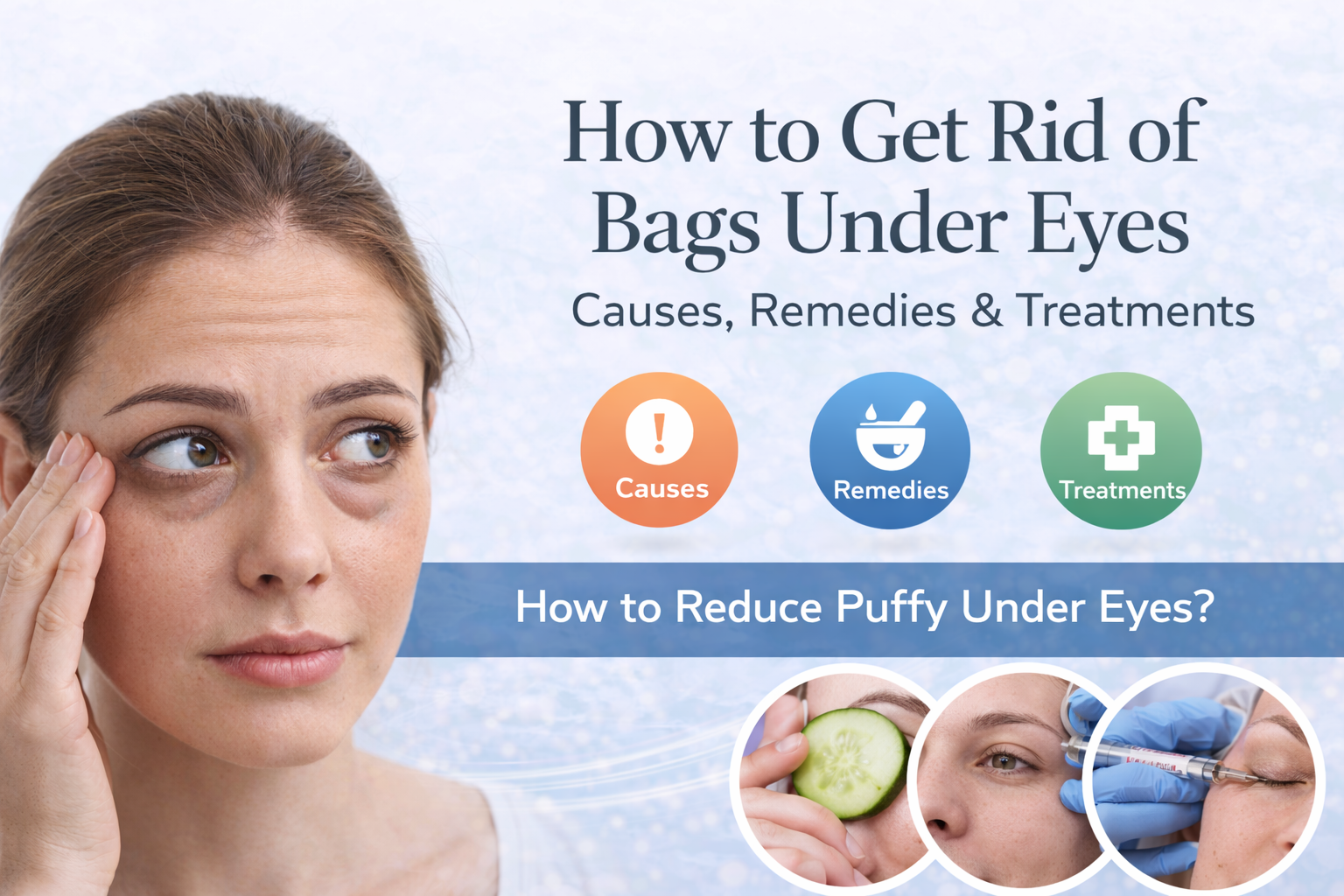
  • How to Get Rid of Bags Under Eyes: Causes, Remedies & Treatments

    How to Get Rid of Bags Under Eyes: Causes, Remedies & Treatments

    You wake up, look in the mirror, and the first thing staring back at you isn’t your face but the puffy shadows beneath your eyes. Bags under eyes can make you look more tired, stressed, or older than you actually are—even on days when you feel completely fine. For many, this is more than just a cosmetic frustration; it’s a daily struggle of concealing, cooling, or explaining.

    Many people search endlessly for ways to get rid of bags under the eyes, but the reality is that not all solutions are the same.

    From home remedies and lifestyle tweaks to advanced medical procedures, there are several approaches depending on the types of eye bags and their underlying causes. This blog will unpack everything, right from eye bag symptoms to the cure for bags under eyes, so you can finally understand what works best for you.

    What are Under-Eye Bags?

    Under-eye bags are the mild swelling or puffiness that forms beneath the eyes. They usually appear as sagging skin, mild discolouration, or fluid buildup, creating a tired or aged look. Medically, they’re often linked to fluid retention under the eyes or weakening of the tissues and muscles surrounding the eyelids. While generally harmless, persistent bags may point to underlying issues like allergies, sinus problems, or lifestyle-related factors.

    There are also different types of eye bags: some caused by excess fat, others by fluid buildup, and some by skin laxity. Understanding which type you have helps in finding the right cure for bags under eyes, whether through home remedies, lifestyle changes, or dermatologist treatment for under-eye bags.

    Common Causes of Bags Under Eyes

    Before diving into how to fix eye bags, it’s important to know why they show up in the first place. Eye bag symptoms often vary from person to person, but here are the leading eye bag causes:

    1. Ageing and Skin Laxity

    As we age, the skin around the eyes loses elasticity and collagen. Fat that normally supports the eyes can shift downward, leading to puffiness and sagging.

    2. Genetics

    Some people inherit a predisposition for bags under eye. If your parents had noticeable under-eye puffiness, chances are higher that you may develop it too.

    3. Fluid Retention

    A very common cause of sudden fluid under the eyes is excess salt intake, hormonal changes, or even crying. This leads to swelling and puffiness that can appear overnight.

    4. Allergies & Sinus Issues

    Allergic reactions or chronic sinus problems often cause swelling around the eyes. Rubbing them frequently can make the problem worse.

    5. Lifestyle Factors

    Poor sleep, stress, alcohol consumption, and dehydration all contribute to tired, puffy under-eyes. Even inconsistent skincare routines can accelerate the problem.

    When analysing the types of eye bags, dermatologists often consider both medical and lifestyle influences. That’s why All Skin Treatments are modified to individual causes rather than a one-size-fits-all approach.

    Home Remedies for Under-Eye Bags

    If you’re looking for simple, at-home solutions, there are several natural remedies that can help reduce puffiness and improve appearance. While these may not offer a permanent cure for bags under the eyes, they can provide relief and visible improvement.

    Cold Compress & Cooling Masks

    Applying a cold compress constricts blood vessels and reduces swelling. Chilled spoons, cucumber slices, or gel masks can temporarily minimise puffiness and give your skin a refreshed look.

    Adequate Sleep & Hydration

    One of the simplest ways to get rid of bags under the eyes is by maintaining proper sleep. Combine this with drinking enough water, and your skin will appear less puffy and more rejuvenated.

    Healthy Diet & Reduced Salt Intake

    A diet high in sodium can lead to fluid retention under the eyes. Reducing salt and incorporating foods rich in antioxidants (like berries and leafy greens) improves circulation and skin health, helping in the natural repair of under-eye tissue.

    Over-the-Counter Creams with Retinol or Caffeine

    Products containing caffeine can reduce swelling by shrinking blood vessels. Retinol-based creams, on the other hand, support collagen production, gradually improving skin thickness and minimising the hollow look associated with eye bags.

    Medical Treatments for Under-Eye Bags

    When home remedies aren’t enough, professional care offers more effective results. Modern dermatology provides New Advanced Skincare Treatments designed specifically to target puffiness, fluid buildup, and sagging skin under the eyes. Here are the most effective options:

    1. Dermal Fillers – Smooth Hollowness & Restore Volume

    When bags under eye are caused by volume loss, sensible fillers are used to restore smoothness. By adding subtle volume beneath the eyes, fillers reduce shadowing and create a fresher, more youthful look.

    2. Laser Treatments – Tighten Skin & Improve Texture

    Laser technology targets pigmentation and tightens loose skin, making it one of the most versatile eye bag treatments. It helps in reducing fine lines, boosting collagen, and improving overall under-eye texture.

    3. Radiofrequency Therapy – Reduce Puffiness & Tighten Skin

    Techniques like Exilis Ultra 360 use radiofrequency energy to stimulate collagen while tightening the skin. This reduces puffiness and improves elasticity, offering gradual but long-lasting improvements.

    4. PRP (Platelet-Rich Plasma) Therapy – Natural Collagen Stimulation

    PRP uses your own blood’s platelets, which are rich in growth factors, to rejuvenate the under-eye area. It enhances collagen production naturally, making it one of the safest and most sustainable under-eye bags treatment options.

    You can also explore microneedling if you have complex issues along with the bagginess of the skin under your eyes. 

    Together, these procedures offer targeted solutions depending on the types of eye bags you have, whether it’s due to sagging skin, fat displacement, or fluid retention.

    Lifestyle and Home Remedies for Reducing Under-Eye Bags 

    What if the biggest secret to solving under-eye puffiness wasn’t hidden in an expensive cream or laser machine, but in your everyday choices? Sometimes, the way you sleep, eat, or even handle stress quietly decides whether your eyes look fresh or fatigued. Lifestyle adjustments may not sound dramatic, but they can transform how long your skin holds onto results and even prevent new puffiness from appearing.

    • Regular Exercise: Improves circulation, reduces stress, and minimises swelling.
    • Elevating the Head While Sleeping: Prevents fluid from pooling around the eyes overnight.
    • Limiting Alcohol & Smoking: Both dehydrate and damage skin, worsening eye bag symptoms.
    • Gentle Skincare Habits: Avoid rubbing the eyes aggressively and always remove makeup before bed.
    • Stress Management: Chronic stress can impact sleep and skin quality, indirectly worsening under-eye puffiness.

    Adopting these changes supports any cure for bags under the eyes and reduces the need for frequent interventions.

    Why Choose Leor Clinics for Under-Eye Treatments?

    While home care can help, a professional evaluation ensures lasting results. At Leor Clinics, every dermatologist’s treatment for under-eye bags is designed around individual skin needs and types of eye bags.

    • Expertise: Specialists accurately identify whether puffiness is caused by fat, fluid, or skin laxity.
    • Technology: From micro needling to advanced fillers and laser therapies, treatments are guided by safe, evidence-based methods.
    • Patient-Centric Care: Transparent discussions about what works best for each individual, with realistic expectations set upfront.

    Conclusion

    Bags under the eyes may show up on almost everyone at some point, but they don’t have to become a permanent part of your reflection. From cooling remedies and mindful eating to advanced options like PRP, fillers, or radiofrequency sessions, there are many paths to explore when wondering how to fix eye bags.

    For anyone looking beyond quick fixes, Leor skin treatment in Pune provides dermatologist-led solutions shaped around your unique skin needs. Whether you’re aiming for an instant pick-me-up or a longer-lasting transformation, the right care can do more than just get rid of bags under eyes; it can help restore the freshness and self-assurance that tired eyes often hide.

    FAQs

    Q1. How do you get rid of eye bags fast?

    Ans: Applying a cold compress, using caffeine-based creams, and staying hydrated can reduce puffiness quickly. For longer-lasting results, professional treatments like fillers or radiofrequency therapy offer faster and more visible outcomes.

    Q2. What is the cause of eye bags?

    Ans: Eye bags causes range from ageing and genetics to lifestyle factors like poor sleep, allergies, and excess salt intake. Sometimes, it’s due to sudden fluid under the eyes caused by hormonal changes or dehydration.

    Q3. Do eyebags go away?

    Ans: Temporary puffiness caused by fluid retention often fades with rest and hydration. However, age-related bags under the eye linked to skin laxity or fat displacement typically require targeted eye bag treatment to improve.

    Q4. What are the Treatments for under-eye bags?

    Ans: Treatments vary depending on the types of eye bags, right from home remedies and retinol creams to advanced procedures like PRP therapy, dermal fillers, and radiofrequency-based technologies. Only a dermatologist can recommend the most suitable option.

    Q5. What cancels out eye bags?

    Ans: Makeup concealers can temporarily hide under-eye puffiness. Cooling remedies, hydration, and lifestyle improvements also help. For more permanent solutions, dermatologist treatment for under-eye bags, such as fillers or laser therapy are highly effective.

    Q6. How to hide eye bags?

    Ans: Concealers with peach or orange undertones help mask under-eye discolouration. Pairing them with a brightening primer and setting powder ensures better coverage. However, for lasting results, exploring medical eye bag treatment is more effective than cosmetics alone

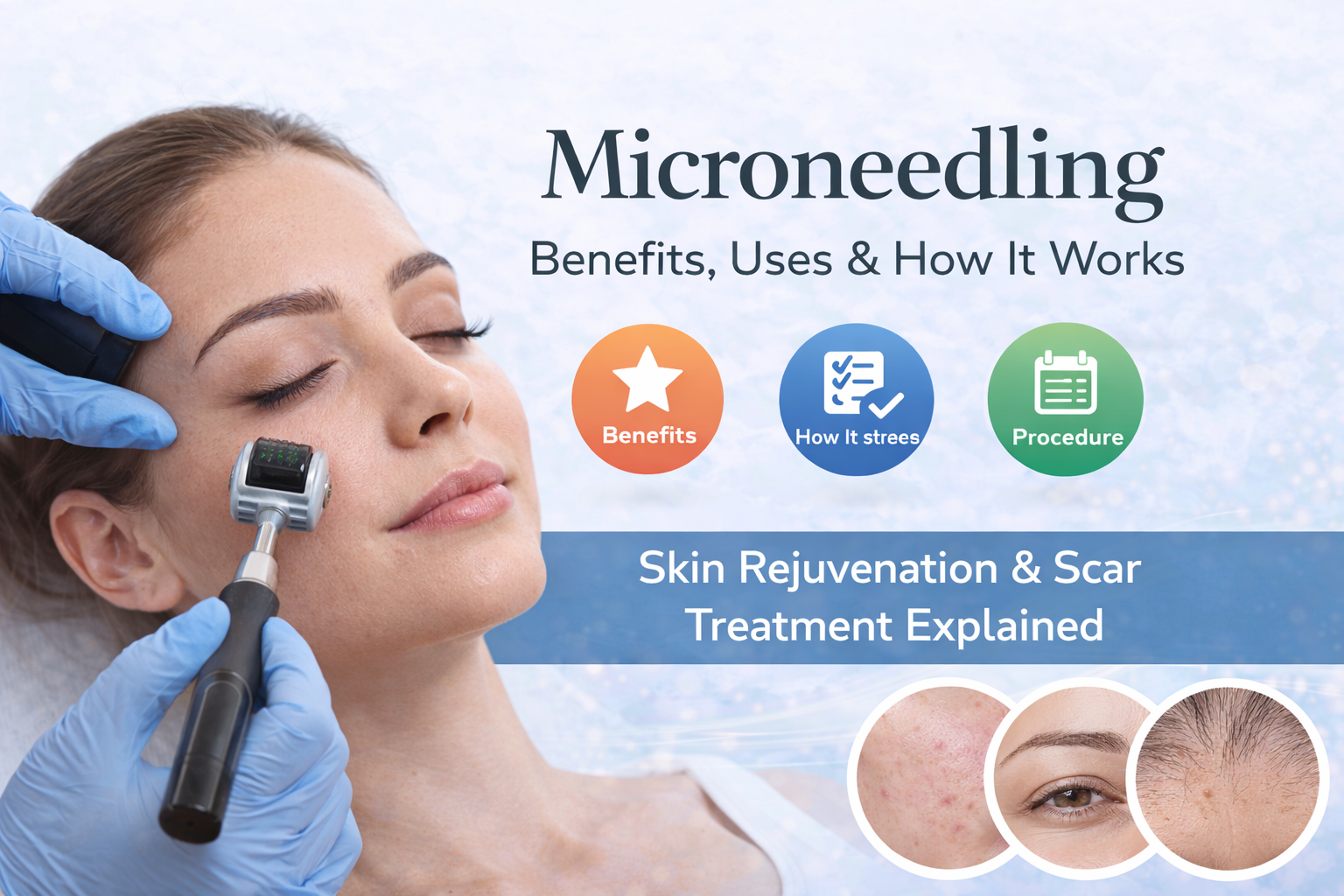
  • What Is Microneedling? Benefits, Uses & How It Works

    What Is Microneedling? Benefits, Uses & How It Works

    Some people call it “skin reset,” others describe it as “a collagen wake-up call.” Whatever you name it, microneedling has gained immense popularity for one reason: it encourages your skin to repair and rejuvenate itself. Unlike cosmetic procedures that simply cover up flaws, micro needle therapy goes deeper, nudging your body’s own healing system into action.

    If you’ve been dealing with stubborn acne scars, wrinkles, uneven skin tone, or even thinning hair, chances are you’ve come across terms like microneedling facial, hair microneedling, or skin needling. But how does it actually work? And why is it considered one of the most effective and minimally invasive treatments available today?

    Let’s walk through the process, science, benefits, and what you can expect if you decide to give microneedling a try.

    What is the Microneedling Process?

    Microneedling Treatment is a cosmetic treatment where very fine, sterilized needles create tiny punctures (or micro-injuries) on the skin’s surface. This might sound intimidating at first, but here’s the interesting part: those controlled micro-injuries are not meant to harm your skin. Instead, they trick your body into thinking, “Something needs repairing.”

    In response, your skin produces more collagen and elastin, the two proteins responsible for elasticity, firmness, and smoothness. This process, known as collagen induction therapy, is what makes microneedling such a powerful tool for skin rejuvenation.

    How Microneedling Works: The Science Behind It

    Microneedling doesn’t “damage” your skin, it strategically nudges it. Tiny, controlled punctures flip on a built-in repair program, releasing growth factors, increasing circulation, and kick-starting collagen and elastin production. Follow the sequence below to see how these micro-injuries gradually translate into smoother, firmer skin.

    1. Micro-Injury Creation – A microneedling device gently pricks the skin with hundreds of tiny, precise punctures. These are so small that they don’t cause scarring but just enough for the body to detect a wound.
    2. Healing Response Triggered – The body immediately responds by activating its wound-healing mechanisms. This includes increasing blood flow and delivering oxygen and nutrients to the treated area.
    3. Collagen and Elastin Boost – The most crucial step is the stimulation of collagen and elastin. These are the proteins that keep skin plump and elastic. As more of them are produced, the skin naturally starts to tighten and renew itself.
    4. Skin Remodeling Over Time – As new collagen forms, the skin’s surface becomes smoother. Wrinkles soften, scars fade, and pigmentation evens out.

    Unlike laser treatments or chemical peels, micro needle therapy doesn’t rely on heat or harsh chemicals. It works with your body’s natural healing ability, which is why it’s considered safe and effective for many skin types.

    Key Benefits of Microneedling for Skin

    The advantages of microneedling facial treatments go beyond surface-level improvements. Dermatology studies and real-world results show consistent micro needling benefits that make it one of the most versatile cosmetic treatments.

    1. Collagen and Elastin Stimulation

    • Collagen is the foundation of youthful skin. Unfortunately, we produce less of it as we age, leading to sagging and wrinkles.
    • Micro needle therapy restarts the collagen-making process, giving skin a tighter, firmer structure.
    • Over time, this “reset” makes your skin more resilient against future aging.

    2. Reduction of Fine Lines and Wrinkles

    • Fine lines around the eyes, forehead, and mouth are among the first signs of aging.
    • Microneedling facial treatments reduce their visibility by smoothing the skin from within.
    • Instead of filling wrinkles artificially, it helps the skin heal itself; making results look more natural.

    3. Scar and Stretch Mark Improvement

    • Acne scars and stretch marks are often caused by damaged collagen.
    • By boosting new collagen, skin needling gradually fills in pitted scars and softens stretch marks.
    • This makes it one of the few non-surgical treatments that effectively address these stubborn issues.

    4. Evening Skin Tone and Texture

    • Hyperpigmentation, enlarged pores, and rough texture can make skin look dull.
    • Microneedling helps break down excess pigmentation and promotes a smoother, more balanced tone.
    • Regular sessions can significantly reduce uneven skin patches and pore size.

    5. Hair Growth Stimulation

    • Other than facial skin, hair microneedling is showing promising results for people with hair thinning.
    • The treatment improves scalp circulation and boosts absorption of topical hair serums, encouraging new growth.
    • For people with early-stage hair loss, it can be an effective supportive therapy.

    Microneedling Procedure at Leor Clinics

    At Leor Clinics, microneedling is offered as part of our New Advanced Treatments designed for safe and effective skin rejuvenation. The process is performed by trained dermatologists, ensuring precision and safety.

    1. Step-by-Step Process

    • Preparation: Skin is cleansed to remove oils, dirt, or makeup.
    • Numbing: A topical anesthetic cream is applied to minimize discomfort.
    • Microneedling: A device fitted with fine, sterilized needles is gently moved over the treatment area.
    • Healing Boost: Serums or soothing masks are applied afterward to enhance healing and hydration.

    2. Is Microneedling Painful?

    • Most patients describe the sensation as mild scratching or tingling.
    • Thanks to numbing cream, discomfort is very minimal.
    • Compared to other cosmetic treatments, microneedling is often seen as one of the more comfortable procedures.

    3. Treatment Duration & Recovery Time

    • Each session usually takes 30–60 minutes depending on the area.
    • Redness and slight swelling may last for 24–48 hours, similar to a mild sunburn.
    • Recovery is quick, and most people return to daily activities within a day or two.

    Who Can Get Microneedling?

    Microneedling facial treatments are widely versatile, making them suitable for many people looking to improve their skin. However, they aren’t a universal solution. The key lies in understanding what conditions microneedling helps most and who should avoid it.

    Acne Scar Treatment

    One of the most common reasons people turn to skin needling is to tackle acne scars. The treatment smooths and fills uneven skin caused by old breakouts, gradually softening pits and indentations left behind. Over multiple sessions of microneedling for scars, the skin looks more even and less marked.

    Anti-Aging and Wrinkle Reduction

    As collagen production slows with age, wrinkles, fine lines, and skin sagging become more prominent. Microneedling encourages fresh collagen and elastin formation, improving skin elasticity. This makes it a preferred choice for those who want to reduce visible signs of aging without opting for invasive procedures.

    Stretch Mark Improvement

    Stretch marks from pregnancy, sudden weight changes, or growth spurts are difficult to fade with creams alone. Micro needle therapy breaks down the fibrous tissue causing these marks while promoting collagen growth, softening their appearance and blending them better with surrounding skin.

    Skin Rejuvenation

    Sometimes, skin doesn’t have scars or deep wrinkles; it just looks dull, rough, or tired. In such cases, microneedling facial sessions act like a reset button. They improve circulation, smooth out texture, and restore a natural, healthy glow that topical products can’t always achieve.

    Hair Loss Treatment

    Beyond the face, hair microneedling is gaining popularity for addressing early hair thinning. By creating microchannels on the scalp, it boosts blood circulation and helps hair serums penetrate deeper. This can stimulate follicles, encouraging stronger and healthier hair growth over time.

    However, people with active acne, eczema flare-ups, skin infections, or open wounds should avoid the treatment, as it may worsen irritation or spread bacteria. Those with certain medical conditions or very sensitive skin should also seek professional advice before proceeding.

    Aftercare & Recovery Tips

    The treatment may last only an hour, but what happens afterward decides how good your results will be. Micro needle therapy pushes your skin into repair mode, yet freshly treated skin is surprisingly vulnerable, like new glass waiting to be shaped. Handle it right, and you’ll see lasting radiance. Neglect it, and the glow may fade too soon.

    What to Expect Post-Treatment

    • Mild redness, swelling, or warmth for 1–2 days.
    • Slight tightness or sensitivity in the treated area.
    • Rare pinpoint bleeding that resolves quickly.

    Skincare Routine After Microneedling

    • Use only gentle, fragrance-free cleansers and moisturizers.
    • Apply sunscreen daily since freshly treated skin is more sun-sensitive.
    • Avoid harsh exfoliants, retinol, and strong actives for at least a week, you dont want to invite micro needling side effects.
    • Stay hydrated and eat a nutrient-rich diet to support skin repair.

    How Long Before You See Results?

    • Initial improvements are visible within 2–4 weeks.
    • For deeper scars or wrinkles, multiple sessions may be needed.
    • Results build gradually as collagen regenerates, making the skin look better over months.

    Professional microneedling is far safer and more effective than at-home rollers. Clinics offer All Skin Treatments under controlled conditions, reducing the risk of infection and ensuring noticeable improvements.

    Conclusion – Why Choose Leor Clinics for Microneedling?

    From scars to wrinkles, pigmentation to hair thinning, microneedling is one of the most versatile skin needling treatments available. It doesn’t cover up flaws; it heals the skin from within by boosting your body’s own repair system.

    At Leor Clinics, dermatologists combine expertise with advanced tools to deliver safe, consistent, and natural results. With a focus on patient care and transparent guidance, every procedure is tailored to individual needs.

    If you’re looking for the best skin treatment in Pune, microneedling at Leor Clinics is a trusted way to achieve healthier, smoother, and more confident skin.

    FAQs

    Q1. What is Microneedling?

    Microneedling is a minimally invasive cosmetic procedure where very fine needles create controlled micro-injuries on the skin’s surface. These tiny punctures trigger the body’s natural healing process, stimulating collagen and elastin production. Over time, this helps improve skin texture, firmness, and overall appearance, making the skin look smoother and more youthful.

    Q2. What does microneedling do to my face?

    Microneedling works by encouraging your skin to repair itself naturally. It reduces the appearance of fine lines, wrinkles, and acne scars while improving skin tone and texture. Rf Microneedling also minimizes enlarged pores, evens pigmentation, and boosts radiance, giving your face a fresher, firmer, and more rejuvenated look over time.

    Q3. How long does microneedling last?

    The results of microneedling vary, but improvements generally last for several months. Skin continues producing new collagen after each session, so benefits build gradually. With proper skincare, sun protection, and occasional maintenance treatments, the smoother, firmer skin achieved through microneedling can be maintained long term, ensuring consistent and lasting results.

    Q4. Is microneedling very painful?

    Most patients find microneedling only mildly uncomfortable rather than painful. A numbing cream is applied before treatment, reducing sensitivity. The sensation is often compared to light scratching or tingling. While slight redness or tightness may follow, discomfort usually fades quickly, and the treatment is generally well-tolerated by most skin types.

    Q5. What are the disadvantages of microneedling?

    While microneedling treatment is considered safe, it does come with temporary side effects. Patients may experience redness, swelling, mild irritation, or sensitivity for a few days. It’s not recommended for individuals with active acne, open wounds, eczema, or infections, as treatment could worsen these conditions. Professional consultation ensures safe outcomes.

    Q6. Why choose Microneedling treatment at Leor Clinics?

    Leor Clinics combines dermatologist expertise with advanced microneedling devices to ensure safe, effective results. Each treatment is tailored to individual skin needs, from scars and wrinkles to hair loss. With strict hygiene standards, personalized care plans, and modern techniques, patients can expect natural, lasting improvements with confidence and comfort.

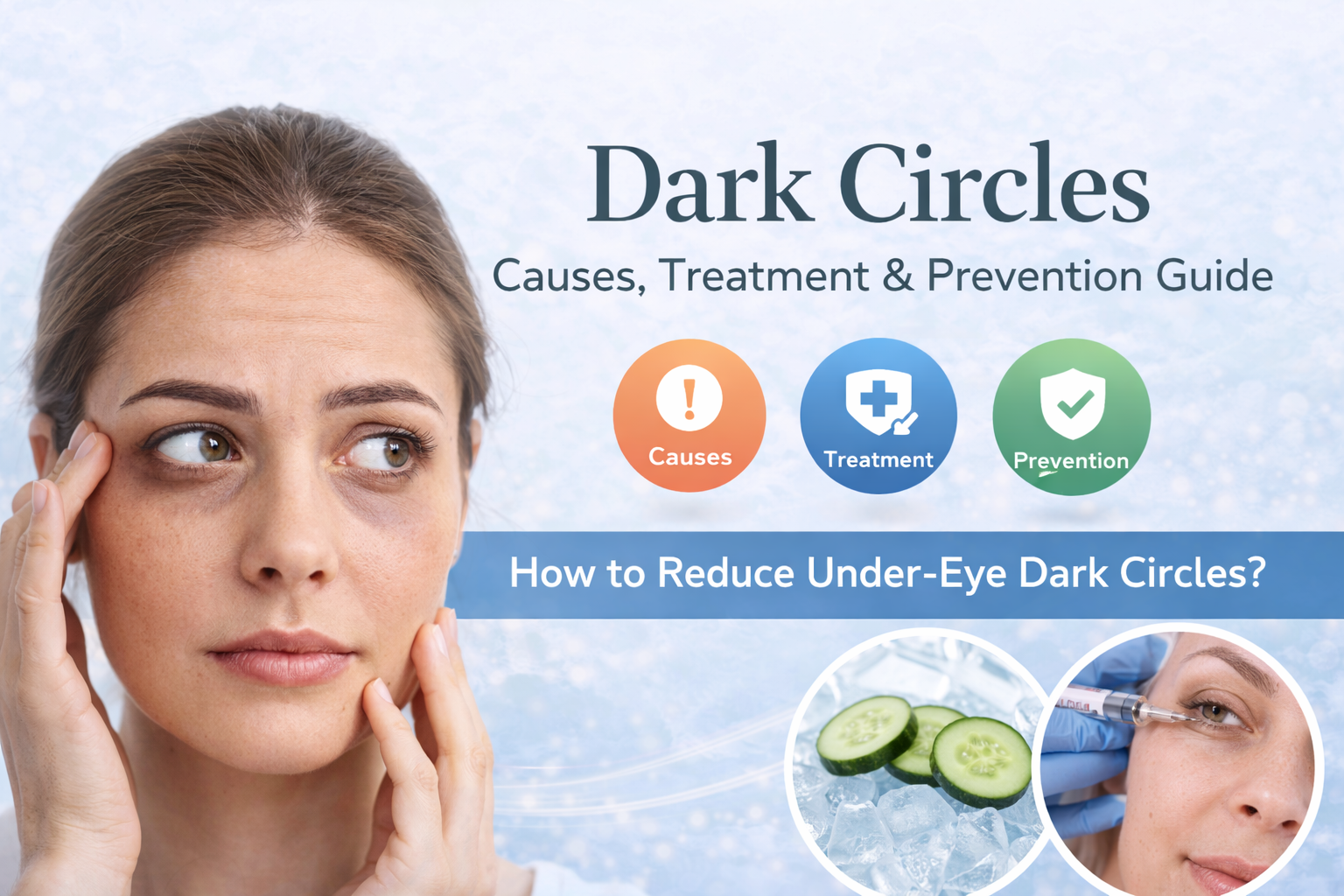
  • How to Reduce Dark Circles? – Complete Guide

    How to Reduce Dark Circles? – Complete Guide

    You wake up, look in the mirror, and there they are…those stubborn dark circles under eyes that refuse to leave. Sometimes they make you look tired even after a full night’s sleep. Other times, they appear out of nowhere, leaving you wondering if you’ve suddenly aged ten years overnight. 

    Friends may casually ask, “Are you okay? You look tired.” That’s often the first sting. Dark circles are both – cosmetic and emotional concerns. They affect confidence, make-up choices, and even how you feel stepping out of your house. However with the right care you can understand them, manage them, and reduce them. Read this blog to learn about how to reduce dark circles. 

    What are Dark Circles? & Why They Appear

    Dark circles are the appearance of darkened skin or shadowing beneath the eyes. In medical terms, they are often called periorbital hyperpigmentation. These aren’t just random patches of discoloration. They result from a mix of factors: the skin structure around the eyes, pigmentation changes, and sometimes lifestyle issues.

    Unlike acne or scars, dark circles usually don’t pose any health risk. But they are among the most common cosmetic concerns worldwide. Some people notice them in their teenage years due to genetics, while others develop them later in life due to aging or lifestyle habits.

    Simply put: dark circles are harmless, but they can be frustrating. The first step to tackling them is understanding dark circle causes.

    Common Causes of Dark Circles

    There are different types of dark circles, and each comes with its own reason. Here are the most common causes explained in easy terms:

    1. Aging and Skin Thinning

    As we age, our skin naturally becomes thinner and loses collagen. The under-eye area, already delicate, starts showing the bluish blood vessels beneath. This shadowing effect makes the skin appear darker.

    2. Genetic Factors

    Sometimes, dark circles are simply part of your family traits. If your parents or grandparents had prominent periorbital dark circles, chances are you might too. Genetics often influences the thickness of skin and how much pigment is deposited under the eyes.

    3. Fatigue and Sleep Deprivation

    The most popular villain. Lack of quality sleep doesn’t directly cause pigmentation, but it makes the skin appear pale and dull. This contrast exaggerates the darkened appearance under your eyes. Sleep deprivation also leads to puffiness, which casts shadows.

    4. Allergies and Eye Irritation

    If you suffer from allergies or tend to rub your eyes often, the skin underneath can darken. Constant irritation or inflammation can trigger pigmentation. People with sinus issues often experience this too.

    5. Dehydration and Poor Diet

    Your skin is like a sponge. Without enough water, it loses plumpness, making veins under the eye stand out more. Add in a poor diet lacking vitamins (especially iron), and your body simply doesn’t get what it needs to maintain healthy skin.

    6. Sun Exposure and Hyperpigmentation

    Too much sun not only tans your skin but also stimulates excess melanin production. Since the skin under the eyes is delicate, it gets darker more quickly when exposed to UV rays without protection.

    Effective Home Remedies and Lifestyle Tips

    If your dark circles are mild or recently developed, small lifestyle changes and home remedies for dark circles can work wonders.

    Cold Compresses

    Applying a chilled spoon, cucumber slices, or an ice pack can shrink blood vessels temporarily. This reduces puffiness and the appearance of shadows. It won’t erase dark circles under eyes overnight, but it gives relief and freshness.

    Proper Sleep and Stress Management

    Aim for 7–8 hours of quality sleep. But remember—it’s not just about the number of hours. Good sleep hygiene (dark room, regular sleep schedule, no late-night scrolling) makes a big difference. Stress management techniques like meditation or yoga help too, since stress worsens fatigue.

    Hydration and Nutrition

    Drink plenty of water and load up on fruits and vegetables rich in vitamin C, K, and iron. Leafy greens, oranges, berries, and nuts can improve skin quality and reduce dullness. This is one of the most natural solutions for dark circles around eyes

    Over-the-Counter and Topical Treatments

    When home remedies for dark circles aren’t enough, you can try over-the-counter solutions. The skincare aisle is full of creams and serums, but only a few ingredients have real impact.

    • Vitamin C: Brightens skin and reduces pigmentation over time.
    • Retinol: Improves collagen production and makes the skin under the eyes thicker.
    • Caffeine: Reduces puffiness by constricting blood vessels, which minimizes shadowing.

    Consistency is the way. Applying a cream once a week won’t help. Most of these products take weeks or months to show results. If you’re looking for the best solution for dark circles, patience is part of the deal.

    Professional and Medical Treatment Options at Leor

    If you’ve tried dark circles treatment at home without success, dermatological procedures may be your answer. These professional options are ideal for stubborn or genetically influenced cases:

    1. Chemical Peel

    A mild chemical peel with ingredients like glycolic acid or lactic acid helps lighten hyperpigmentation under the eyes.

    2. Exilis Ultra 360

    This advanced technology uses radiofrequency and ultrasound to tighten skin, stimulate collagen, and reduce wrinkles, improving the overall appearance of under-eye skin.

    3. Sensible Fillers

    For hollow under-eyes (tear troughs), Sensible Fillers can add volume, reducing shadows and giving a fresher look.

    4. Q-Switch Laser

    The Q-Switch Laser targets pigmentation effectively. It breaks down excess melanin, making the under-eye skin lighter over multiple sessions.

    Each treatment comes with its own suitability factors, which only a dermatologist can confirm. These are often considered the best treatment for dark circles when topical methods fail.

    You can explore more about chemical peel types, a separate blog written on the said treatment.

    Prevention Strategies for Dark Circles

    The truth about dark circles under eyes is that once they become prominent, treating them requires time, effort, and sometimes medical help. But prevention is where you hold the upper hand. Stopping them before they deepen is far easier than chasing after cures later

    Consistent Skincare

    Your under-eye area is fragile—almost paper-thin compared to the rest of your face. This makes it more vulnerable to damage, pigmentation, and fine lines. A consistent skincare routine is less about luxury and more about maintenance. Gentle cleansing prevents buildup of irritants. Hydration restores elasticity. Under-eye creams with antioxidants (like vitamin E and C) act like tiny bodyguards, fighting off oxidative stress caused by pollution and lifestyle habits. Skip this, and the skin becomes dull, dry, and more prone to periorbital dark circles.

    Sun Protection

    Here’s where most people slip. They carefully apply sunscreen on their cheeks and forehead but completely ignore the under-eye area. The irony? This delicate patch is the most susceptible to UV-induced pigmentation. Over time, unprotected sun exposure stimulates melanin production, making shadows appear darker. A broad-spectrum SPF (paired with sunglasses or even a hat) is your best bet. Think of it as insurance for your future self, you may not notice the payoff tomorrow, but five years later, your skin will thank you.

    Healthy Lifestyle

    It sounds cliché, but lifestyle habits leave fingerprints all over your face. A diet lacking iron or vitamin B12 doesn’t just leave you sluggish—it shows up as dull skin and deep shadows. Skipping exercise slows circulation, making blood pool under the eyes. Smoking constricts blood vessels, worsening that bluish tint. Excess alcohol dehydrates, leaving the skin hollow and shadowed. Each small habit adds up, creating the perfect recipe for persistent dark circles around eyes. Flip the script—nourish your body, and your skin reflects the change.

    Avoid Allergens

    This is the sneaky one. Many people don’t realize their allergies are the hidden culprit behind their under-eye pigmentation. Constant rubbing when your eyes itch only worsens irritation and damages delicate skin. Dust, pollen, or even certain cosmetics can quietly trigger chronic inflammation. The result is long-term darkening that no amount of cucumber slices can fix. Identifying and managing allergens; whether through antihistamines, air purifiers, or swapping skincare products, is not just about comfort, it’s a crucial dark circles prevention strategy.

    The Bigger Picture

    Prevention isn’t just about fighting circles—it’s about shifting perspective. Every sip of water, every SPF application, and every night of proper rest is a small investment in keeping dark circles under eyes at bay. These habits may seem ordinary, almost too simple, but when combined, they form a powerful defense against pigmentation, thinning, and dullness. Prevention works quietly, often invisibly, until the day you realize you still look well-rested, even when life gets chaotic.

    Why Choose Leor Clinics in Pune for Dark Circles Treatment

    When it comes to addressing periorbital dark circles, the difference often lies not only in the technology used but also in the expertise guiding it. Leor Clinics in Pune emphasizes a patient-first approach where treatment isn’t about chasing trends but about understanding individual needs.

    Experienced Specialists

    Dark circles don’t look the same on everyone. At Leor, dermatologists evaluate factors like skin tone, underlying pigmentation, vascular changes, or structural hollowness before recommending a treatment path. This careful assessment ensures that the chosen method matches the patient’s condition.

    Customized Care Plans

    Instead of a one-size-fits-all solution, treatment is tailored. Someone with genetic dark circles around eyes may benefit from fillers, while another with sun-induced pigmentation may need targeted laser therapy. The focus is on combining therapies, if required, for balanced and natural-looking results.

    Safety and Transparency

    Medical procedures around the eyes require precision. Treatments are performed with clear communication about expected outcomes, timelines, and possible limitations. Patients are informed of both benefits and realistic results before committing to any dark circles treatment.

    Integration of Technology with Skin Health

    Rather than relying solely on devices or creams, Leor Clinics uses new advanced treatments using high-end tech like Exilis Ultra 360 with ongoing skin health management. This ensures that results are not only visible but also sustainable.

    Conclusion

    Dark circles are common, but they don’t have to control your confidence. From simple home remedies for dark circles to professional options like fillers and lasers, there are multiple ways to tackle them. The key is to identify your specific dark circle causes and address them with the right approach.

    If you’re looking to remove dark circles under eyes effectively, balance prevention, skincare, and when needed, medical treatments. And if you’re in Pune and wondering how can you get rid of dark circles, Leor Clinics could be the best solution for dark circles you’ve been searching for.

    FAQs

    Q1. How to remove dark circles fast?

    Ans: Using cold compresses, hydrating well, and applying caffeine-based creams can give quick relief. For long-term results, combine lifestyle changes with consistent skincare.

    Q2. How to remove a dark circle in 7 days?

    Ans: While complete removal in 7 days is unrealistic, reducing puffiness and dullness is possible with proper sleep, hydration, cold compresses, and a vitamin-rich diet.

    Q3. Can dark circles go away?

    Ans: Yes, depending on the cause. Lifestyle-related dark circles under eyes can fade with rest and nutrition. Genetic or chronic types may need professional dark circles treatment.

    Q4. Can ice remove dark circles?

    Ans: Ice or cold compresses help reduce puffiness and temporarily make dark circles around eyes less visible. However, they don’t remove pigmentation permanently.

    What causes dark circles?

    Ans: Common dark circle causes include aging, genetics, lack of sleep, allergies, dehydration, and sun exposure. Identifying your root cause is the first step toward effective treatment.
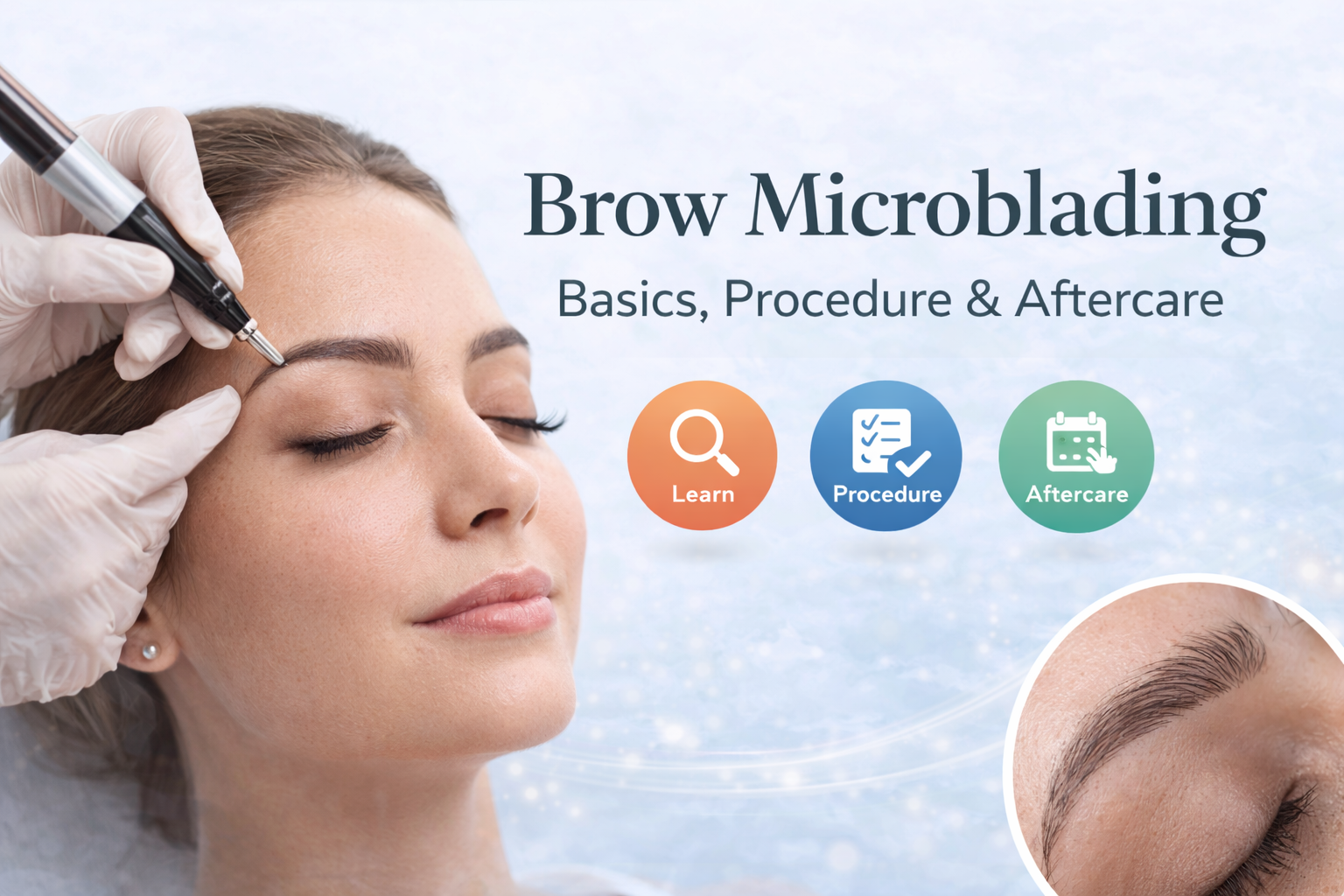
  • What Exactly is Brow Microblading? Understanding the Basics

    What Exactly is Brow Microblading? Understanding the Basics

     Some mornings, brows behave. Most mornings, they don’t. Smudged pencils, uneven arches, gaps where hair refuses to grow, it’s a routine many live with until they hear about brow microblading.

    Brow microblading is a way to give your brows structure, fullness, and definition and make it look like that’s just how they naturally grow. Using a small hand tool with tiny needles, a technician draws individual strokes that resemble actual hairs. These strokes are not printed or shaded in; they’re etched manually, one by one, with pigment placed just beneath the skin’s surface.

    Read this blog to understand what goes on behind the scenes while undertaking this treatment

    The Brow Microblading Procedure: A Step-by-Step Guide

    Every brow tells a different story, from years of over-plucking to simply being born sparse. The microblading process honors that uniqueness. Here is what the treatment path will follow:

    Consultation and Mapping

    You sit down. Not for a drawing, but a design session. Your artist observes your bone structure, facial symmetry, and how your natural brows respond when you smile, frown, or look surprised. With pencil and ruler, your future microblading eyebrows shape is sketched, guided by both proportion and personality.

    Numbing and Skin Prep

    No one wants to flinch mid-stroke. So, a topical anesthetic is applied and left to settle. Meanwhile, your skin is cleansed and prepped. It is important the surface is free of oils or residue for the pigment to sit evenly.

    The First Pass

    This is where the microblading begins. With careful hand pressure, the artist draws individual strokes using the microblading tool, each one mimicking real hair. This is not sweeping or shading; it is meticulous etching, often requiring deep focus and silence.

    Pigment Absorption

    Once the strokes are drawn, pigment is layered over the brows and allowed to soak in. This helps saturate the skin evenly, deepening the definition. The excess is gently wiped off.

    Final Adjustments

    After the pigment settles, the artist may make a few touch-ups. Then comes the mirror moment, when you see micro blading brows that finally feel like yours.

    Key Benefits of Choosing Brow Microblading

    Brow grooming is one of those rituals that often feels small but quietly steals time and energy. When you live with patchy, shapeless, or uneven brows, it becomes a daily interruption. Microblading offers a pause, which is not forever, but long enough to change your relationship with the mirror.

    • Brows That Feel More Like Yours: The strokes do not sit on top of the skin like makeup. Instead, they are placed just beneath the surface to follow the direction of real hair. This method gives the brows a fuller look without appearing drawn on.
    • Maintenance Becomes Optional, Not Mandatory: With a defined brow shape in place, many people find that they need less effort each morning. The routine shifts, no more frequent touch-ups or careful balancing between two sides that never quite match.
    • Your Face, Not a Template: Rather than imposing a fixed brow style, the shape is built using your bone structure and hair pattern as guides. As a result, the brows fit your face naturally, without needing to explain or justify their shape.
    • Semi-Permanent in Duration, Steady in Impact: While the pigment gradually fades over months, the day-to-day benefit is immediate. The brows stay balanced and present, quietly holding their place even through humid weather, long days, or skipped makeup.
    • A Gentle Fix for Difficult Histories: Some people come to microblading after years of trying to fix thin brows caused by over-plucking, medical treatment, or genetics. The technique does not promise a permanent reversal, but it can create the appearance of volume where there was once barely a trace.

    Who is an Ideal Candidate for Brow Microblading?

    There’s no perfect brow type. But some people benefit more from microblading eyebrows than others. If you have:

    • sparse or patchy brows that never fully grew back
    • light-colored brows that seem invisible without makeup
    • asymmetrical shapes that throw off your facial balance
    • a history of over-plucking or waxing in your teens
    • medical conditions like alopecia, or are post-chemotherapy

    Then you are likely to be a good fit. The treatment is especially transformative for people with scanty eyebrows, offering them a natural frame where there was none.

    Skin type also matters. While microblading works best on normal to dry skin, oily skin may need more touch-ups. A patch test and consultation help clarify suitability.

    Preparing for Your Brow Microblading Appointment

    Good brows begin before the blade even touches the skin. Here’s how to arrive ready:

    • Avoid alcohol and caffeine 24 hours prior. They thin your blood and can cause excess bleeding during the procedure, which may dilute the pigment.
    • Skip blood thinners, fish oil, and Vitamin E supplements a few days before, unless medically prescribed.
    • Hold off on retinol or acids around the brow area for at least a week. These can make the skin overly sensitive.
    • Avoid tweezing or waxing. Let your natural shape grow out. The artist will do the clean-up.
    • No facials or tanning at least five days prior. A stable skin surface helps pigment settle evenly.

    If you’ve had Botox or fillers, wait at least two weeks. The skin needs to return to its baseline state. And if you’re exploring semi-permanent makeup solutions for the first time, ask questions, good artists love informed clients.

     Brow Microblading Aftercare: Ensuring the Best Results and Healing

    This part is non-negotiable. You’ve just had pigment inserted into your skin. It needs time, care, and stillness to heal properly.

    • Keep the brows dry for at least 7 days. That means no sweating, swimming, or long showers where steam reaches your face.
    • Do not pick or scratch. Flaking is normal. Picking can pull out pigment and leave gaps.
    • Use the provided aftercare balm. Apply it sparingly, only as instructed. Too much moisture can disrupt healing.
    • Avoid makeup on the brow area until fully healed (for 10 to 14 days).
    • Stay out of the sun. UV rays can fade pigment prematurely.

    Healing happens in phases. At first, brows look darker and thicker. Then they flake and fade. The true results emerge after 3 to 4 weeks, once the skin settles.

    How Long Does Brow Microblading Typically Last?

    The most common question: does it really last?

    Yes, but it evolves. On average, microblading eyebrows last between 12 and 18 months. Some retain pigment longer, especially with dry skin and minimal sun exposure. Others may need touch-ups within a year.

    It is not permanent like traditional tattoos. But that’s the point! Faces change, trends shift, and brow preferences evolve. You are not stuck. A yearly touch-up is often enough to maintain the look.

    Plus, with new advanced treatments like nano blading eyebrows, there are now options to extend results even longer or enhance them further.

    Potential Risks and Side Effects of Brow Microblading

    The risks are low but not zero. Immediately after the procedure, it is normal to experience:

    • redness
    • mild swelling
    • slight tenderness
    • flaking or scabbing

    These fade with proper aftercare. However, allergic reactions, infections, or pigment misplacement can happen in rare cases, usually due to poor technique or unhygienic tools.

    Brow Microblading vs. Other Brow Enhancement Techniques

    What works for someone with oily skin may not suit someone with dry, delicate skin. And what looks good on camera may feel too bold in person. Here’s how eyebrow microblading compares to other modern options.

    • Microblading: Creates fine, hair-like strokes. These are placed by hand, using a small blade. It works best when you want natural looking brows that appear like they’ve grown that way, not like they’ve been drawn on.
    • Microshading: This treatment is more about softness. Instead of strokes, pigment is dotted into the skin to create a light powder effect. The finish looks closer to tinted makeup. It’s ideal if your skin is oily or if you prefer a gentle fade rather than defined lines.
    • Combination Brows:Borrow from both methods. Strokes are used at the front to mimic real hair. The ends are softly shaded for extra depth. This suits people who want both realism and shape.
    • Nano Blading Eyebrows: Involves a machine, not a manual tool. The pigment goes in using ultra-fine needles that are even smaller than those used in microblading. The strokes can be more precise, especially useful if your skin is thin or sensitive. 

    Each method speaks to a different need, like shape, softness, precision, or simplicity. At Leor Clinics, we offer personalized brow enhancement treatments tailored to your skin type and style preferences. Ready to redefine your brows? Book an appointment with our specialists and find the perfect match for your face.

    FAQs

    Q1. How long does brow microblading last?

    Ans. Microblading results usually remain visible for twelve to eighteen months. The fading happens gradually, and a single touch-up once a year is often enough to keep the brows looking fresh.

    Q2. What are the advantages of microblading?

    Ans. It offers structure without the stiffness of makeup. Microblading adds fullness where needed and reduces the daily pressure of fixing uneven brows that never quite match, especially in a rush.

    Q3. Is microblading expensive?

    Ans. Though it may seem like a big spend at first, many find the cost worthwhile once they stop buying brow pencils and reclaim all those minutes spent redrawing their arches.

    Q4. Is microblading good for your eyebrows?

    Ans. Yes, because it works alongside your natural growth, not against it. The process does not damage brow follicles, and for many, it brings a healthier approach to brow maintenance.

    Q5. How painful is microblading?

    Ans. Most people feel a scratching sensation rather than real pain. Numbing cream helps keep it manageable, and the experience is often described as more annoying than actually uncomfortable.

  • Understanding Hair Loss & GFC

    Understanding Hair Loss & GFC

    Hair loss doesn’t knock on the door; it quietly settles in. What begins as a little extra hair on the pillow soon starts showing up in selfies, partings, and subtle comments from relatives. In India, where hair is often tied to identity, be it long braids, well-kept beards, or voluminous manes, losing it can feel personal, unsettling, and sometimes even unfair.

    According to reports, 58% of men between 30 – 50 show signs of patterned baldness. Women also face rising cases of thinning hair, often hidden under layers of styling and social pressure. Therefore, hair loss impacts how we feel about ourselves: our confidence, self-image, and how we carry ourselves in daily life.

    But hair loss is no longer a closed chapter. With new medical technologies like GFC (Growth Factor Concentrate), there’s now a way to work with your body’s own healing abilities. Read this blog to learn more about this treatment.

    Understanding Hair Loss

    The phenomenon of Indian men experiencing severe hair loss is rarely genetic alone.

    Androgenetic alopecia (hereditary sensitivity to DHT) remains the chief culprit, but tropical heat, frequent oiling-and-washing cycles, calcium-poor diets, thyroid fluctuations after pregnancy, chronic work stress, and lingering post-COVID telogen effluvium all add fuel.

    Up to 100 hairs a day in the drain is physiological; crossing that line can shrink density, expose the scalp, and trigger self-consciousness. Women often experience diffuse thinning rather than obvious patches, yet the emotional toll, like low self-esteem, social withdrawal, and even depression, can run deeper because societal norms equate long, voluminous hair with femininity. 

    To offset such experiences, Leor Clinics recommends early screening, blood tests, and other supported check-ups before choosing any intervention.

    What Exactly is GFC (Growth Factor Concentrate) for Hair? 

    GFC full form hair = Growth Factor Concentrate. In plain language, it is a vial of your own blood’s most potent healing proteins, platelet-derived growth factors that are separated, purified, and re-injected into your scalp.

    As compared to traditional PRP, gfc treatment for hair uses a closed, sterile system with advanced centrifugation and separation technology. This process removes nearly all red and white blood cells, leaving behind a pure, potent concentrate of growth factors. And then finally, a targeted, cleaner serum that helps reactivate dormant follicles, supports healthy hair cycling, and enhances blood flow to the scalp, with the necessary consistency.

    Types of Growth Factors in GFC and Their Role in Hair Health

    GFC therapy works by delivering a precise combination of bioactive proteins, known as growth factors, directly to the scalp. By injecting a concentrated dose of these growth factors into areas of hair thinning, GFC stimulates the hair cycle at a cellular level. Let’s break down the core growth factors involved and how each contributes to healthier, denser hair:

    Growth FactorHow it Helps Your Scalp
    PDGF (Platelet-Derived)Triggers cell proliferation and angiogenesis, crucial for nutrient-starved follicles.
    VEGF (Vascular Endothelial)Forms new blood vessels, improving oxygen delivery in humid coastal climates.
    EGF (Epidermal)Speeds up keratinocyte turnover, aiding scalp barrier recovery after dandruff episodes.
    IGF-1 (Insulin-Like)Protects follicle stem cells from DHT damage, common in androgenetic alopecia.

    Who is an Ideal Candidate for GFC Hair Treatment?

    GFC – Therapy is most effective when hair follicles are still alive, even if they’re thinning or struggling.

    The growth factor concentrate for hair acts as a biological nudge, revitalising weakened follicles, boosting blood circulation, and encouraging fresh hair growth. But it works best when there’s still something to stimulate.

    You’re likely a good candidate if you have hair loss concerns due to the following reasons:

    • You’re in the early to moderate stages of hair loss.
    • You’re a new mother facing postpartum hair fall and prefer avoiding chemical or hormonal treatments.
    • You’re under chronic stress from factors like corporate pressure, irregular sleep, or academic burnout and that led to temporary shedding or telogen effluvium.
    • You’ve experienced side effects with medications like minoxidil or finasteride and are looking for a gentler, body-friendly solution.
    • You want to act before it’s too late, when there’s still density to preserve and follicles to rescue.

    However, GFC isn’t a solution for everyone.

    If your scalp has developed smooth, shiny patches with no visible hair follicles (a sign of irreversible follicle loss or scarring alopecia), or if you have uncontrolled diabetes, bleeding disorders, or active scalp infections, you’ll need a doctor’s clearance. Maybe even possibly a different line of treatment altogether.

    In short: if your hair is calling for help, GFC therapy might just be the gentle, scientific push it needs, especially when started early.

    The GFC Hair Treatment Procedure

    Your clinic visit will be split into three acts: draw, spin, and inject.

    Compared with platelet-rich plasma (PRP), gfc therapy is shorter in sessions (usually three or four) and richer in growth factors, making the calendar of follow-ups lighter.

    Preparing for Your GFC Session: Before the Procedure

    1. Pause aspirin, ibuprofen, vitamin E, omega-3 capsules, or ayurvedic blood-thinners for 72 hours.
    2. Skip alcohol and smoking for 48 hours to optimise platelet quality.
    3. Hydrate well; arrive after a light breakfast to avoid dizziness.
    4. Wash hair with mild shampoo the previous night. No gels, serums, or heavy oils on D-day.

    The GFC Procedure: Step-by-Step During the Treatment

    1. A numbing cream is applied to your scalp to keep you comfortable during the treatment. This takes about 30–40 minutes to take effect.
    2. A small amount of blood (around 10–15 mL) is drawn from your arm, just like a regular blood test.
    3. Your blood is then processed to extract a golden-yellow serum rich in growth factors. This step takes around 30–40 minutes, during which you can relax.
    4. Once ready, the doctor gently injects this serum into the thinning areas of your scalp using tiny needles or a derma-pen. Thanks to the numbing, most people feel only mild pressure or a light pricking sensation.
    5. After the injections, a cool compress is applied to soothe the area and reduce any redness or swelling.
    6. The entire procedure usually takes 60–90 minutes, and you can head home right after.

    After Your GFC Treatment: Post-Procedure Care

    • Keep the scalp clean and dry for 12 hours; avoid scratching.
    • Postpone vigorous gym, swimming, steam, or Holi-style colours for 48 hours.
    • Use pH-balanced shampoo after the first day; skip oils and styling sprays for a week.
    • Sleep on a clean pillowcase; apply ice if mild swelling occurs.

    Advantages of GFC for Hair: Why Choose This Treatment?

    1. Safe, Natural, and Biocompatible: GFC treatment uses your own blood, which means there’s no risk of allergies, cross-infection, or foreign chemical reactions. It’s a completely autologous and natural approach, designed to work in harmony with your body.

    2. Higher Potency with Fewer Sessions: Thanks to its advanced preparation process, GFC is more concentrated than regular PRP. This allows for stronger results in fewer sittings; often, just 3 to 4 sessions are needed for visible improvement.

    3. Quick Procedure, No Downtime: The treatment is done in-clinic, usually within 60 to 90 minutes, with no cuts, no stitches, and no recovery bed required. You can head home or return to work immediately after, it’s that simple.

    4. Compatible with Other Hair Therapies: Whether you’re on supplements, using topical treatments, or undergoing microneedling or laser therapy, GFC works well as a supportive boost, helping you maximise the effects of other non-surgical hair regrowth options.

    5. Inclusive and Lifestyle-Friendly: GFC suits both men and women, and it’s respectful of cultural practices; it can be safely administered regardless of whether you wear a turban, hijab, or headscarf.

    Potential Complications and Side Effects of GFC Treatment

    Expect only minor, fleeting annoyances: pinpoint redness, swelling, or tenderness that fade within 24–48 hours. Bruising is rare and usually discreet under hair. No systemic reactions have been reported in Indian studies, but disclose dengue, hepatitis, or platelet disorders beforehand for safety.

    Recovery Time After GFC for Hair

    The hours after a GFC session are generally uneventful, and that’s a good thing. For most, the scalp feels slightly warm or tight, similar to how it might after a deep cleanse or light sun exposure. This sensation fades without fuss, usually within the first day.

    You might notice mild redness or tenderness around the injection points. These are not signs of complication, but simple outcomes of the needlework involved, and they tend to settle quietly on their own in 12 to 24 hours.

    There’s no bandaging, no scalp wraps, and no special pillow needed. You can head back to your regular day with just one note of caution: skip anything that makes you sweat heavily. That includes workouts, long sun exposure, or styling products for about 48 hours.

    Expected Results and How Long They Last

    Visible shedding often decreases after 4 weeks; baby hairs sprout between 8–12 weeks, with peak density around 6 months when the third or fourth session ends. Usual results show 20–30 % uptick in hair count on trichoscopy for responsive patients. The effectiveness is expected to stay for 12–18 months; although a single maintenance sitting yearly keeps gains steady. 

    If you are interested in our Leor Exclusive Treatments for your hair concerns, book a consultation to proceed further.

    FAQs

    Q1. Is GFC treatment good for hair?

    Ans. Yes. By delivering purified growth factors, gfc treatment boosts follicle survival, increases thickness, and prolongs the growth phase without surgery or synthetic drugs, making it an excellent option for early-stage baldness in Indian men and women.

    Q2. Which is better, GFC or PRP?

    Ans. PRP is effective, but gfc hair treatment contains a higher concentration of growth signals and almost no inflammatory white cells, translating to faster results, fewer sessions, and lower post-procedure discomfort for most patients.

    Q3. How long do GFC results last?

    Ans. After completing three or four sessions, benefits typically last one to one-and-a-half years. Annual maintenance boosters can extend longevity, especially when combined with topical minoxidil or oral supplements.

    Q4. Can I take GFC every month?

    Ans. Yes, dermatologists often schedule sessions four weeks apart and stop after a clinical plateau. Monthly frequency is safe, but more than six sittings a year rarely adds extra value.