

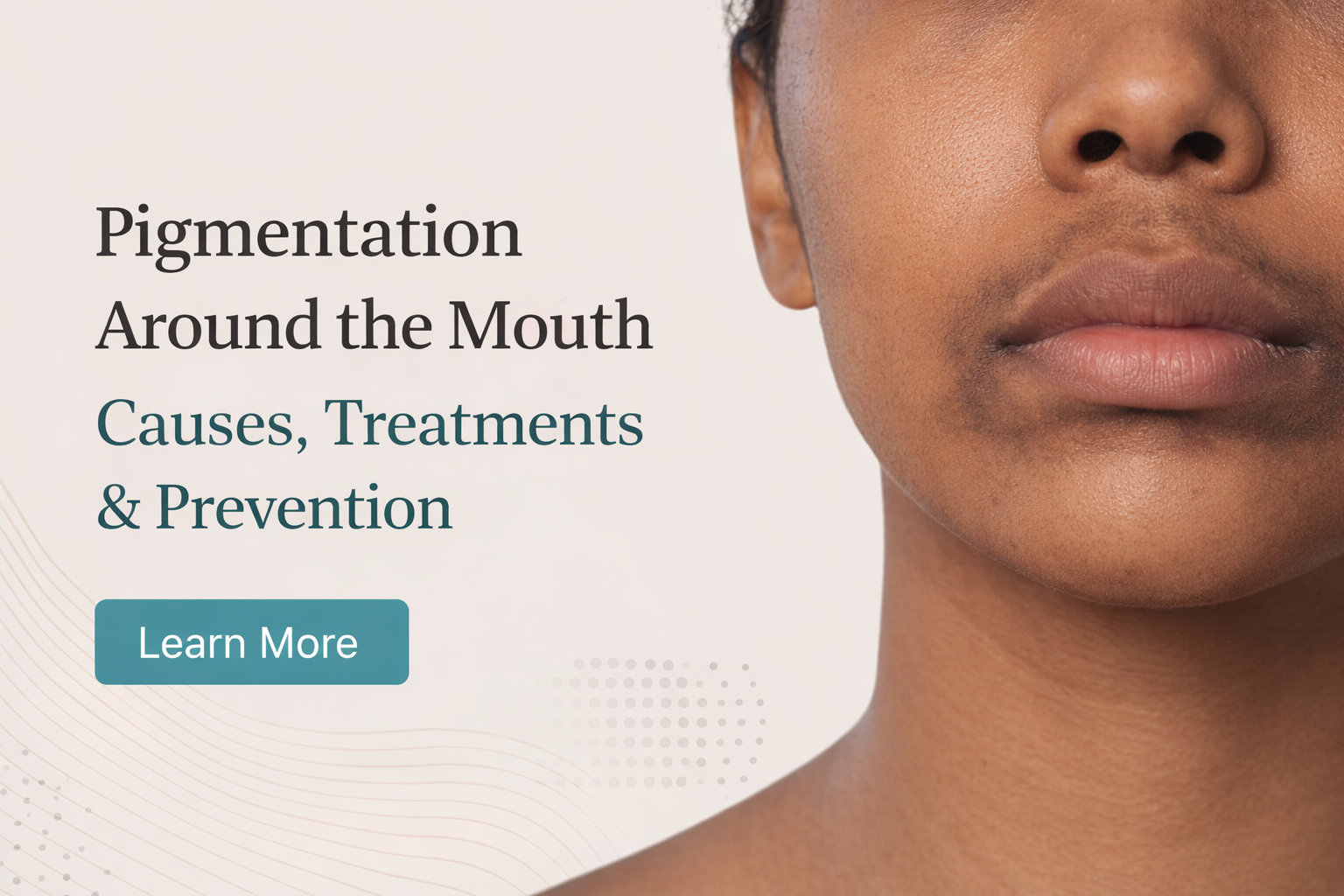
Pigmentation around the mouth, also known as perioral hyperpigmentation, appears as dark patches, uneven tone, or black marks around the lips and chin. Although it is not medically harmful, it can significantly affect confidence and overall facial harmony.
In urban environments, especially, factors like pollution, sun exposure, stress, and hormonal fluctuations make this concern increasingly common. While home remedies may offer mild improvement, stubborn pigmentation often requires structured treatment.
Let’s understand why it happens — and more importantly — how to treat and prevent it effectively.
What Causes Pigmentation Around the Mouth?
Pigmentation rarely appears without a reason. In fact, the skin around the mouth is thinner and more reactive, which makes it vulnerable to discoloration.
1. Sun Exposure
Firstly, UV radiation is one of the most common causes. When exposed to sunlight without protection, the skin produces excess melanin. Over time, this leads to visible dark patches around the mouth.
Moreover, many people apply sunscreen to the cheeks and forehead but ignore the area around the lips. As a result, pigmentation builds gradually and becomes difficult to reverse.
2. Hormonal Changes
Secondly, hormonal fluctuations play a major role. Conditions such as pregnancy, thyroid imbalance, PCOS, or oral contraceptive use may trigger melasma.
Consequently, this appears as patchy hyperpigmentation around the mouth and jawline. Women between 20–40 years are particularly prone to this type of discoloration.
3. Post-Inflammatory Hyperpigmentation
In addition, acne, rashes, allergic reactions, or even aggressive scrubbing can leave behind dark marks.
This is known as post-inflammatory hyperpigmentation (PIH). Although the inflammation may heal, the skin “remembers” the trauma and darkens as part of its recovery response.
4. Nutritional Deficiencies
Interestingly, internal deficiencies can also show up externally. For example, Vitamin B12 or iron deficiency may cause unexplained blackness around the mouth.
Therefore, if pigmentation appears without any obvious trigger, a simple blood test may provide clarity.
5. Skin Irritation & Daily Habits
Finally, repeated irritation weakens the skin barrier. Frequent lip licking, harsh shaving, fragranced cosmetics, or toothpaste contact can all trigger mild inflammation.
Over time, this irritation results in gradual darkening.
Professional Treatment Options

Some skin stories run a little deeper than what a home remedy or a dab of aloe can fix. When the blackness around the mouth starts to feel like a shadow that won’t fade, professional treatments step in; not just to lighten your skin, but to bring back comfort and confidence. Below are tried-and-tested clinical methods that work for stubborn pigmentation around the mouth.
1. Laser Treatments
Lasers don’t just treat the surface; they dive deep into the skin’s pigment layers to target the root of hyperpigmentation concerns around the mouth. For those dealing with black marks around the mouth that have been around for a while, laser therapy can offer a noticeable difference.
The process involves bursts of focused light energy that break down excess melanin. It’s precise, powerful, and especially useful for dark patches around the mouth caused by long-term sun exposure or hormonal changes.
It’s not an instant fix, but many people feel a shift in how their skin behaves and looks after a few sessions. That said, this isn’t a treatment you walk into casually. Skin tone, pigment depth, and even emotional readiness matter, so a proper consultation is the first step, not the treatment.
2. Chemical Peels
Peels often sound scary, but in trained hands, they’re more like a reset button for your skin. Chemical peels work by removing dull, damaged layers and making space for fresh, even-toned skin to come through.
If your mouth pigmentation looks darker than the rest of your face or if you’ve noticed blackness around the mouth after acne or sunburn, peels can smooth things out—both in tone and texture.
The acids, like glycolic or lactic, are carefully chosen based on your skin type. These aren’t harsh DIY versions. These are skin-safe and effective when applied by a professional who understands how skin pigmentation really works.
Over time, this treatment helps your skin bounce back, healthier, brighter, and far more even.
3. Topical Therapies
Sometimes the real change starts with a tube of cream, used night after night with a lot of patience and hope. Topical therapies are powerful allies in fighting hyperpigmentation around the mouth, if used correctly.
Prescription-grade creams with ingredients like kojic acid, azelaic acid, or retinoids work quietly behind the scenes to fade black patches around the mouth. These are not miracle creams, but consistent application under expert guidance often makes more difference than people expect.
How to Prevent Pigmentation Around the Mouth
Some skin concerns sneak up on you. One day, your complexion feels even, the next — there’s a dark patch around your mouth you can’t unsee. While treatment options exist, prevention often saves both time and emotional effort. Preventing pigmentation around the mouth isn’t just about skincare; it’s about daily habits, awareness, and consistency.
Let’s break it down into what you can actually do.
1. Start With What Touches Your Skin Every Day
Lip balms, shaving creams, toothpaste, or even your favourite snacks; your skin remembers everything. Some ingredients can trigger irritation or allergic reactions that turn into hyperpigmentation around the mouth over time.
Opt for fragrance-free, non-comedogenic products, especially for the areas around your lips and chin. Patch-test new products on your wrist or behind your ear before applying them to the face.
2. The Real Deal with Sun Protection
Even five minutes under the sun without SPF can start the slow buildup of mouth pigmentation. UV exposure triggers melanin production, especially around sensitive areas like the mouth.
A broad-spectrum sunscreen with at least SPF 30 should be a non-negotiable part of your morning routine, regardless of whether you’re stepping out or working by a window. And no, your lipstick or foundation with SPF 15 isn’t enough.
3. Don’t Pick, Pop, or Over-Scrub
The skin around your mouth is thinner and more reactive. Every time you pop a pimple or aggressively scrub to “clean” the area, you risk inflammation, which leads to post-inflammatory hyperpigmentation around the mouth.
Gentle care is your best friend here. Use mild exfoliants only 1–2 times a week and avoid harsh tools or physical scrubs.
4. Maintain Blood Sugar and Hormonal Balance
Internal health plays a surprisingly big role in how your skin behaves. Conditions like insulin resistance, PCOS, or thyroid imbalances can show up on your skin as black patches around the mouth or jawline.
Regular checkups, balanced meals, and avoiding excessive sugar intake can support skin health from within. If pigmentation is persistent despite topical care, it might be time to look inward.
5. Keep the Area Hydrated and Nourished
Dry, under-nourished skin is more prone to becoming pigmented—especially around the folds of the mouth. Apply a barrier-repairing moisturiser twice daily and ensure the area stays protected against environmental stressors like pollution or wind.
Ingredients like niacinamide, ceramides, and hyaluronic acid can help the skin stay plump and resistant to darkening.
Conclusion
Dealing with pigmentation around the mouth often starts with understanding where it comes from. And once you know the cause, it becomes easier to manage.
Home care helps to a point, but not all darkness around the mouth remedies work the same for everyone. That’s why some cases need structured treatments like laser sessions, chemical peels, or dermatologist-approved topical therapies.
The key is to be consistent with skincare, protect your face from the sun, and avoid products that irritate your skin. Spotting the early signs of black patches around the mouth or any kind of mouth pigmentation allows for faster recovery and less stress.
Hyperpigmentation around the mouth may be stubborn, but with the right care, it’s not permanent. If pigmentation around your mouth has been bothering you for a while, it’s time to stop guessing and start treating it right. At Leor Clinics, our skin experts offer personalised solutions from Glow Facials adjusted for your skin’s unique needs.
FAQs
Q1. How to get rid of pigmentation around the mouth?
Ans. Treating pigmentation around the mouth involves a combination of targeted skincare, professional treatments like chemical peels or laser therapy, and strict sun protection. Dermatologist-guided care ensures deeper hyperpigmentation around the mouth treatment with long-lasting results over random home remedies.
Q2. Why does pigmentation around the mouth occur?
Ans. The cause of pigmentation around the mouth often includes sun damage, hormonal imbalance, post-acne marks, and even lifestyle habits like smoking or excessive licking. This leads to darkness around the mouth, black patches, and stubborn hyperpigmentation that may worsen without timely intervention.
Q3. What vitamin deficiency causes hyperpigmentation around the mouth?
Ans. Deficiency in Vitamin B12 is commonly linked to blackness around the mouth or a dark area around the mouth. Low levels disrupt melanin production, causing uneven skin pigmentation. Regular testing and supplementation can support other treatments for darkness around mouth effectively.
Q4. What is the fastest way to cure hyperpigmentation?
Ans. The fastest results for pigmentation around the mouth treatment come from clinic-grade options like laser treatments and chemical peels. These penetrate deep into pigmented layers and work faster than over-the-counter creams. Dermatologist-prescribed care ensures better outcomes for stubborn mouth pigmentation issues.
Q5. Is vitamin C good for hyperpigmentation?
Ans. Yes, Vitamin C is widely used in topical therapies for fading dark pigmentation around the mouth. It helps reduce melanin production and brightens the skin. For visible improvement, pair Vitamin C with professional treatments like glow facials or peels under expert care.


Leave a Reply