

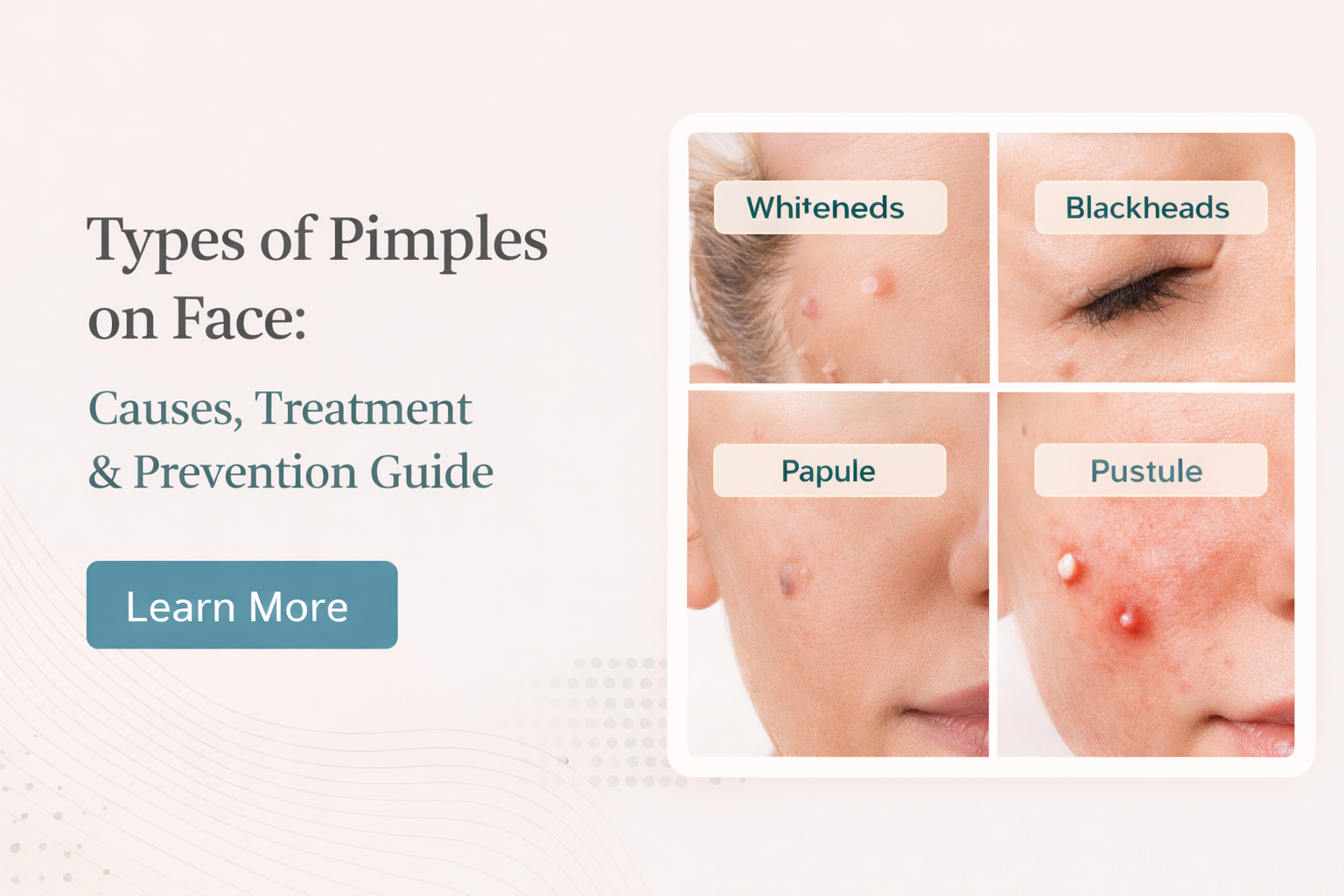
Every pore on your face connects to a sebaceous gland that produces sebum. Because of this, facial skin remains especially prone to breakouts. When oil mixes with dead skin cells or bacteria, pimples form.
Breakouts often bring frustration, especially before important events. However, you are not alone. Understanding the types of pimples on face is the first step toward clearer skin. When you understand your acne, you can treat it correctly.
Understanding the Types and Causes of Pimples
Your skin constantly communicates with you. Pimples often signal imbalance — whether due to oil production, bacteria, hormones, or lifestyle habits.
Broadly, the types of pimples on the face fall into two categories:
i. Non-inflammatory Acne (Comedones)

These breakouts do not hurt. However, they affect skin texture and clarity. They form when pores clog with oil, dirt, and dead skin cells.

- Whiteheads: Closed pores filled with trapped oil and debris. They are common in oily and combination skin types.

- Blackheads: Open pores filled with oxidised sebum. Contrary to popular belief, blackheads are not dirt. The dark colour appears due to oxidation.
- Small pimples on face: These usually refer to comedonal acne. They often appear on the forehead, cheeks, and chin.
ii. Inflammatory Acne
Inflammatory acne appears red, swollen, and sometimes painful. These types of face breakouts often feel more distressing.

- Papules: Small red bumps without pus.

- Pustules: Inflamed pimples filled with pus. If irritated, they may leave acne scars.

- Nodules and Cysts: Deep, painful pimples under the skin. These take longer to heal and often require professional care.
Each of these kinds of pimples on face has a different cause. Some result from clogged pores. Others develop due to bacteria, hormones, or product reactions. Therefore, one single cream cannot treat every type effectively.
Effective Treatments for Each Type of Pimple
Different types of pimples respond to different treatments. Identifying your acne type helps you choose the correct solution.
1. Over-the-Counter (OTC) Treatments
For mild acne or early breakouts, OTC solutions may help.
Salicylic Acid
Unclogs pores and treats blackheads and whiteheads.
Benzoyl Peroxide
Kills acne-causing bacteria and works well for pustules.
Niacinamide
Reduces inflammation and strengthens the skin barrier.
Retinoids
Prevent clogged pores and fade post-acne marks.
However, use these products carefully. Overuse may cause dryness or irritation. Consistency works better than aggressive application.
2. In-Clinic Treatments
Moderate to severe acne often needs professional care. Small bumps on face or recurring pustules respond better to deeper treatments.
Chemical Peels
Help exfoliate the top layer and reduce clogged pores.
Q-Switch Laser
Targets hyperpigmentation, acne scars, and certain active acne cases.
Customised Facial Treatments
Clinics like Leor Clinics tailor treatments to your skin type. These sessions combine exfoliation, hydration, and calming therapies.
Severe cystic acne may also require oral medication or prescription retinoids.
Treating acne is not just about removing pimples. It is about protecting your skin barrier and long-term skin health.
How to Prevent Future Pimples
Prevention requires consistency. Small daily habits make a big difference.
Cleanse Gently
Wash your face twice daily. However, avoid harsh scrubs. Over-cleansing weakens your skin barrier and triggers more oil production.
Instead, choose a gentle cleanser suited to your skin type.
Moisturise Daily
Even oily skin needs moisturiser. Skipping hydration may increase oil production.
Use a lightweight, non-comedogenic moisturiser to maintain balance.
Watch Your Diet
Although no single diet cures acne, patterns matter. High-glycaemic foods may trigger breakouts in some people. Dairy can also affect hormones.
If flare-ups follow certain meals, observe and adjust accordingly.
Manage Stress and Sleep
Lack of sleep disrupts hormones and increases inflammation. Similarly, stress releases cortisol, which boosts oil production.
Therefore, adequate rest supports skin recovery.
Avoid Touching Your Face
Picking spreads bacteria and deepens inflammation. Moreover, it increases the risk of pigmentation and scars.
If needed, use spot treatments instead.
Avoid Trend Overload
Trying too many trending products confuses your skin. Instead, follow a simple and consistent routine tailored to your needs.
Pimples: Do’s and Don’ts
Do:
- Patch test new products
- Wash pillowcases regularly
- Moisturise consistently
Don’t:
- Pick or squeeze pimples
- Switch products frequently
- Use harsh DIY remedies like toothpaste or lemon
When Should You See a Professional?
Persistent acne can affect more than just appearance. It can impact confidence and emotional well-being.
Signs You Need Expert Help:
- Acne lasting more than two months
- Painful nodules or cysts
- Recurring breakouts in the same area
- Dark spots or scarring
Risks of Ignoring Acne:
- Permanent acne scars
- Enlarged pores
- Long-term hyperpigmentation
Early intervention prevents long-term damage.
Conclusion
Effective acne treatment addresses both symptoms and root causes. Instead of suppressing breakouts temporarily, focus on restoring balance.
Clear skin takes time. However, you do not have to navigate the journey alone.
A consultation at Leor Clinics helps identify your type of acne. Based on that, specialists recommend suitable options — from peeling treatments for pimples to advanced in-clinic procedures.
With the right guidance, healthier skin becomes achievable.
FAQs
Q1. How do I identify my pimple type?
Observe size, texture, and pain level. Small pimples on face usually indicate non-inflammatory acne. Painful, swollen ones suggest inflammatory types.
Q2. How to fix pimples on face?
Start with gentle cleansing and targeted treatments. Persistent kinds of pimples on face may require professional care.
Q3. Can ice remove pimples?
Ice reduces swelling temporarily. However, it does not eliminate pimples completely.
Q4. What type of pimple will not go away?
Cysts and nodules often require medical treatment. Ignoring them may cause scars.
Q5. How to remove pimple marks?
Chemical peels and resurfacing treatments help fade pigmentation. Early treatment improves results.


Leave a Reply